.webp)
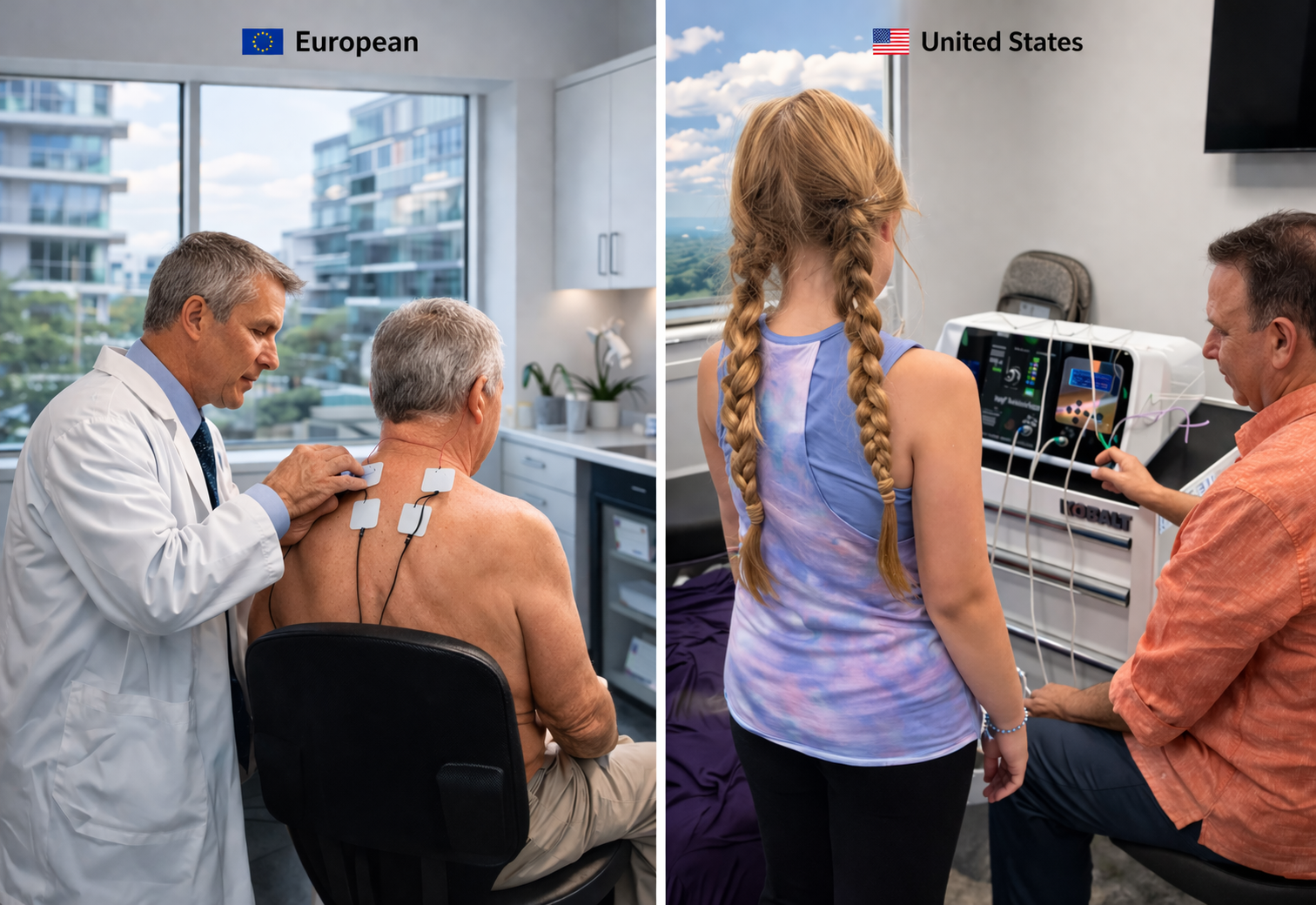
Scrambler Therapy is a non-invasive neuromodulation technique that aims to relieve chronic pain by altering how the brain interprets pain signals. It uses external electrodes to transmit "non-pain" information to nerve fibers, replacing the pain messages sent to the brain.
Its use has grown significantly across Europe and the United States, particularly in treating neuropathic pain, such as chemotherapy-induced peripheral neuropathy, fibromyalgia, and complex regional pain syndrome (CRPS). As a novel approach to pain modulation, it offers a non-pharmaceutical solution, making it a candidate for broad international research interest.
Global studies are emerging, but U.S. scrambler therapy research differs significantly from European research on scrambler therapy in terms of methodologies, regulations, and treatment priorities. Understanding these differences reveals how diverse medical cultures approach pain and innovation.
The next section explores how regulatory bodies like the FDA and European Medicines Agency (EMA) shape the research process on each side of the Atlantic.
Scrambler Therapy is not currently FDA-approved in the U.S. for broad therapeutic use. However, devices used in Scrambler Therapy may be available under specific regulatory pathways such as Investigational Device Exemptions (IDE) or Compassionate Use.
In Europe, many devices gain market access through the CE Mark, which reflects compliance with European medical device regulations. The EMA focuses on evaluating medical therapies but leaves most device approvals to notified bodies under the Medical Device Regulation (MDR) framework.
IRB protocols in the U.S. are more standardized. In contrast, European ethics committee structures vary by country, affecting study speed and uniformity.
Regulatory differences lead to varied research compliance, timelines, and study authorization processes, ultimately influencing trial design and duration.
Up next: how clinical trial design and patient selection differ between the U.S. and Europe.
U.S. scrambler therapy trials tend to follow rigorous randomized controlled trial (RCT) frameworks, often requiring double-blind and placebo-controlled protocols. These aim to meet strict FDA requirements and emphasize clinical validation.
European scrambler therapy trials often allow more flexibility, especially in pilot studies. While many still use randomization, open-label or comparative cohort designs are common, which can speed up early-phase research.
Trial design impacts how findings are interpreted and applied in practice.
Next, we look at the types of pain conditions each region prioritizes in research.
In the U.S., researchers focus primarily on cancer-related neuropathic pain, post-surgical pain, and spinal disorders. Studies often investigate chemotherapy-induced neuropathy and post-mastectomy pain due to their prevalence in oncology care.
In Europe, research includes broader functional pain syndromes, especially fibromyalgia, CRPS, and diabetic neuropathy. This reflects a greater emphasis on central sensitization and neuroinflammatory pain mechanisms.
Pain phenotyping varies: U.S. studies often classify pain by source (e.g., tumor-related), while European studies use symptom clusters like sensory loss, burning pain, or allodynia.
This variation impacts study outcomes, as response to Scrambler Therapy may differ across neuropathic pain subtypes. It also affects device protocols and electrode placement strategies.
In the next section, we’ll compare how these studies are supported and funded across both regions.
In the U.S., funding comes from the National Institutes of Health (NIH), university grants, and private device manufacturers. However, lack of FDA approval can limit large-scale funding, making many U.S. studies institutional or pilot-funded.
In Europe, researchers benefit from Horizon Europe and national health research agencies (e.g., Germany’s BfArM or the UK’s NIHR). European studies often include public-private partnerships, improving trial scalability.
European scrambler therapy research is often conducted in academic medical centers, with support from public hospitals. In contrast, U.S. scrambler therapy funding is more institution-specific and less centralized.
This impacts the pace and volume of research, with Europe producing more preliminary and observational studies, while U.S. studies aim for higher regulatory thresholds.
Coming up: we explore how outcomes are measured and reported in both regions.
Both regions use common pain metrics such as the Visual Analog Scale (VAS) and Numeric Rating Scale (NRS). However, U.S. trials emphasize quantitative endpoints and adverse event monitoring, in line with FDA expectations.
European studies often include more qualitative data, such as patient-reported outcomes and Quality of Life (QoL) assessments. They may also include subjective satisfaction scales and patient interviews.
Follow-up intervals also vary. U.S. trials are more likely to report at 3, 6, and 12 months, whereas European studies may stop at 1–3 months unless longer follow-ups are grant-funded.
Data transparency is higher in U.S. publications, often requiring ClinicalTrials.gov registration. European trials vary by country in terms of reporting standards and open-access publication norms.
We now synthesize these differences and discuss how they influence global Scrambler Therapy adoption.
U.S. vs. Europe clinical research on Scrambler Therapy differs in six main dimensions:
Differences in regulatory frameworks, funding sources, and clinical priorities shape how each region designs and reports Scrambler Therapy research.
No. Scrambler Therapy is not FDA-approved for general use but may be used under investigational or compassionate protocols.
U.S. trials use more randomized, placebo-controlled designs. European trials often use broader inclusion criteria and qualitative measures.
Italy, Germany, and the U.S. lead in publication volume, with growing contributions from the UK, Spain, and Canada.
European studies often report high satisfaction and pain relief, but variability in methodology limits direct comparisons with U.S. data.
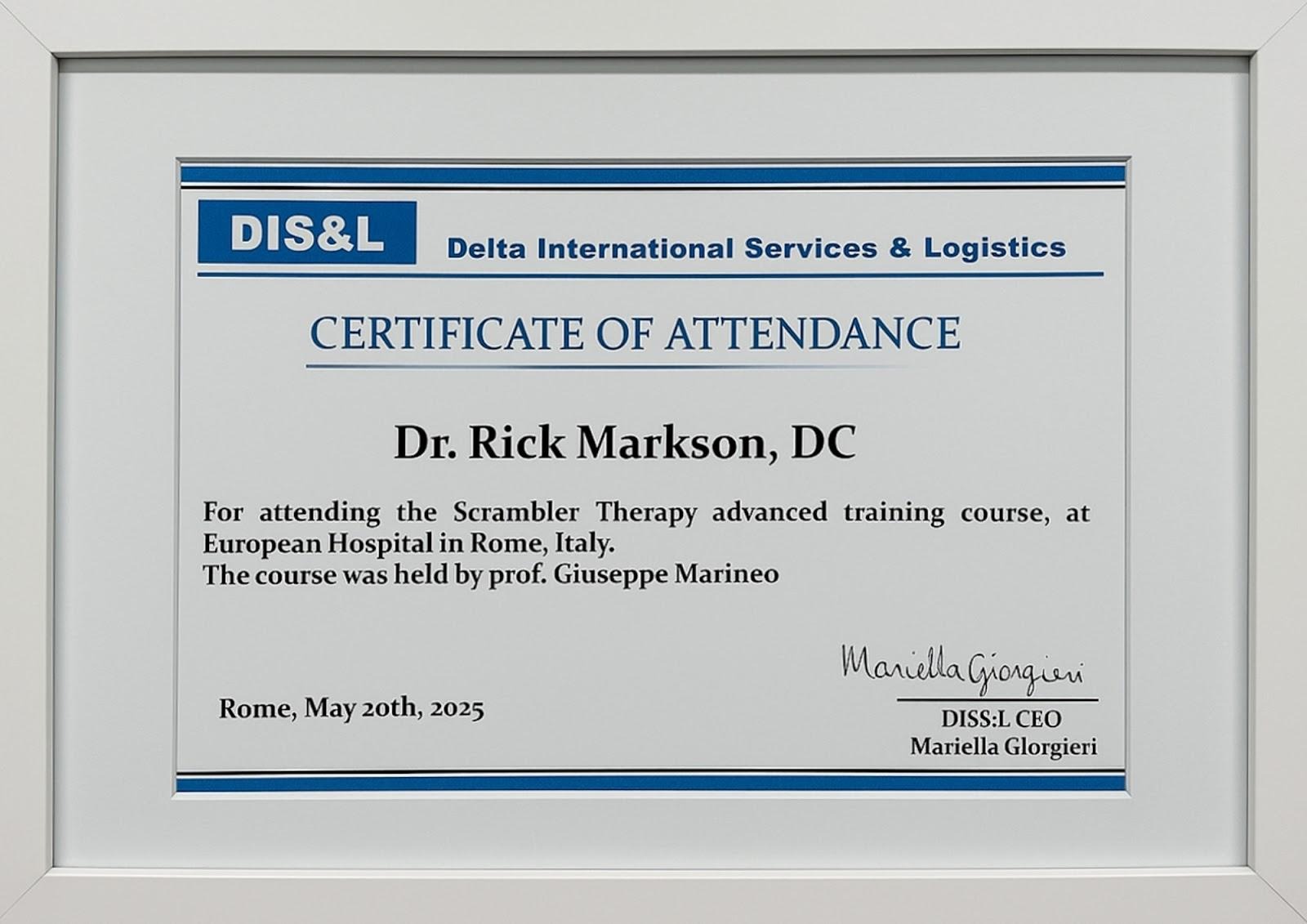
Discover South Florida Scrambler Therapy is one of the nation’s leading clinics for noninvasive chronic pain relief, offering FDA-cleared Scrambler Therapy® for adults and children. Co-founded by Dr. Rick Markson, one of the few practitioners worldwide to receive advanced certification directly from the therapy’s inventor in Rome, our clinic delivers globally recognized expertise with compassionate, personalized care. If you or a loved one is living with treatment-resistant nerve pain, we invite you to schedule a consultation and explore a life beyond pain.
📘 What is scrambler therapy?
📘 What to Expect During a Scrambler Session
📘 CRPS Pain Relief Without Drugs—Real Patient Stories
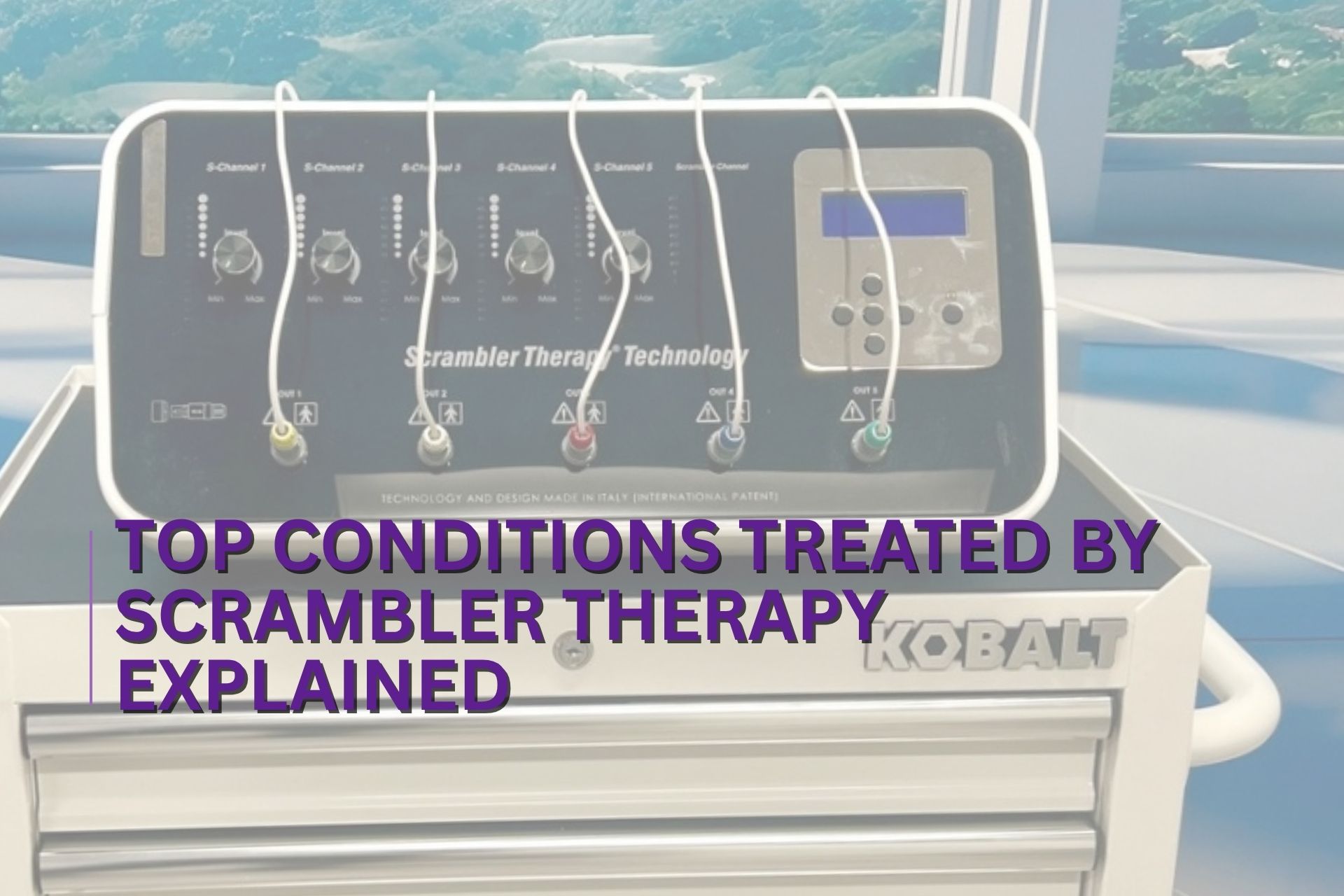
📘 Conditions that scrambler therapy can treat
Keep up to date with important news about our clinic and your medical records.



.svg)
.svg)
.svg)