.webp)
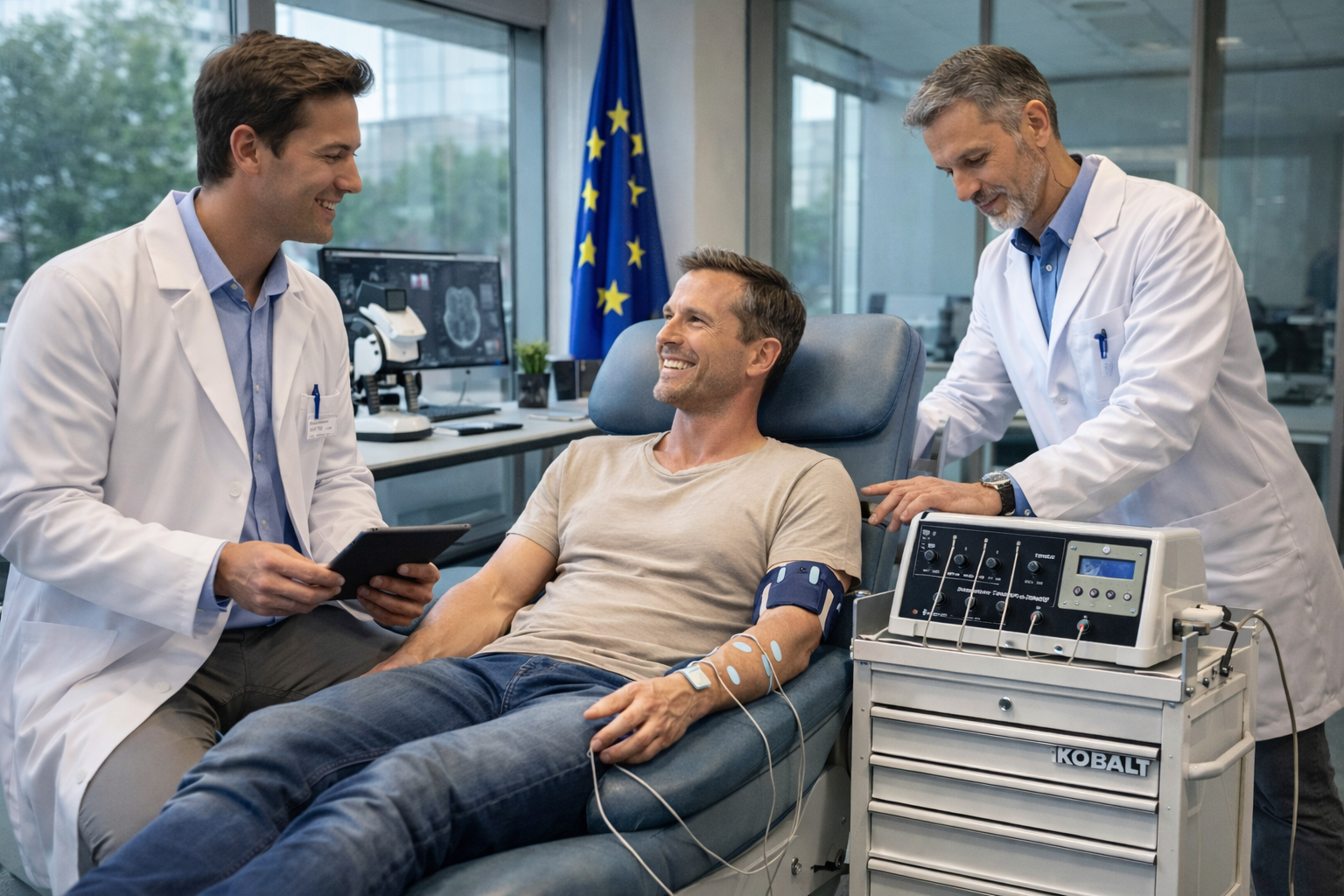
Scrambler Therapy is a non-invasive electrostimulation treatment designed to reprogram chronic pain signals through the skin using surface electrodes. It aims to modulate pain perception by sending “non-pain” information to nerve fibers via low-intensity electrical signals.
In Europe, interest in Scrambler Therapy has surged due to the growing need for opioid-free neuropathic pain treatments. Multiple clinical trials, research initiatives, and hospital integrations have helped shape a robust evidence base. European institutions—supported by EU healthcare policies and funding mechanisms—have become pioneers in refining Scrambler protocols and understanding patient outcomes.
This article presents a detailed, research-backed review of European scrambler therapy studies, covering:
Scrambler Therapy originated in Italy in the early 2000s, developed by Prof. Giuseppe Marineo. Italy was the first country to certify the device under CE marking standards, enabling early trials in pain clinics and neurology departments.
Timeline of Early Adoption:
Unlike the FDA-regulated slow uptake in the US, Europe moved swiftly due to less restrictive device regulation and growing clinical demand for alternative pain treatments. The therapy was categorized under electroanalgesia and neuromodulation, attracting early adoption in university hospitals.
Several multi-center randomized controlled trials (RCTs) have validated the effectiveness of Scrambler Therapy in Europe. These trials followed good clinical practice (GCP), using placebo groups, VAS pain scoring, and long-term follow-up.
Key RCTs and Their Features:
These trials are listed on ClinicalTrials.gov EU registry and meet standard publication requirements, contributing to peer-reviewed literature and global treatment guidelines.
European Scrambler Therapy trials have focused on neuropathic and chronic pain conditions, especially those with poor pharmacological responses.
Pain Conditions Treated:
Neuropathic Pain
Fibromyalgia
Post-Surgical Pain
Chemotherapy-Induced Peripheral Neuropathy (CIPN)
These conditions vary in sensory threshold, pain profile, and inflammation markers, allowing diverse insights into how Scrambler Therapy adapts to nerve signaling differences.
European clinical outcomes of Scrambler Therapy reveal substantial pain relief, often measured by Visual Analog Scale (VAS), patient-reported outcome measures (PROMs), and quality of life assessments.
Patient Feedback:
Patients consistently report better sleep, emotional well-being, and reduced medication reliance. Follow-up studies show that pain relief often persists for weeks to months, though maintenance sessions may be required.
European results show similar or better effectiveness compared to U.S. and Asian research, though protocol differences and healthcare system structures affect outcomes.
Cultural implementation and reimbursement systems influence adoption rates and treatment accessibility. In Europe, national healthcare support ensures broader patient access compared to private system-driven limitations in the U.S.
Most European trials use the MC-5A Scrambler Therapy device, manufactured by Delta International Services in Italy. Devices are calibrated under CE-certified standards and follow strict protocol configurations.
Device Settings in Europe:
Protocols across EU trials emphasize individual calibration, progressive waveform modulation, and multi-session regimens, leading to more consistent patient outcomes.
Scrambler Therapy is now part of pain management pathways in hospitals across Italy, Germany, Netherlands, and the UK. The therapy has reimbursement codes in some countries, and NHS pilot programs have been explored in the UK.
Therapy access varies by national health policy. Countries with universal healthcare models integrate it more rapidly, while others limit access due to cost-effectiveness uncertainty.
European researchers have identified several challenges in Scrambler Therapy trials.
Limitations Identified:
These factors affect replicability, statistical significance, and broader clinical acceptance. Researchers call for larger RCTs with standardized methodology across countries.
Expert opinions across Europe are cautiously optimistic. Pain specialists appreciate the low-risk, non-invasive nature and call for broader research.
Quoted Views:
Academic publications in The European Journal of Pain and BMJ Neurology Open highlight growing acceptance among clinicians, especially for drug-resistant chronic pain syndromes.
European research is heading toward next-gen treatment models, with integration of AI protocols, wearable Scrambler devices, and personalized neuromodulation based on patient profiles.
Future Developments:
The European Commission aims to develop a pan-European guideline on non-pharmacologic pain treatment by 2026, with Scrambler Therapy positioned as a key modality.
Yes, it's available in over 15 EU countries, primarily in pain clinics and university hospitals.
Studies show a 40–60% reduction in VAS scores, particularly for neuropathic and fibromyalgia pain.
Side effects are minimal—temporary skin redness or tingling are the most common.
Italy, Germany, France, and Spain lead in adoption and clinical trial volume.
Costs range from €80–€150 per session. Some insurance plans partially cover it.
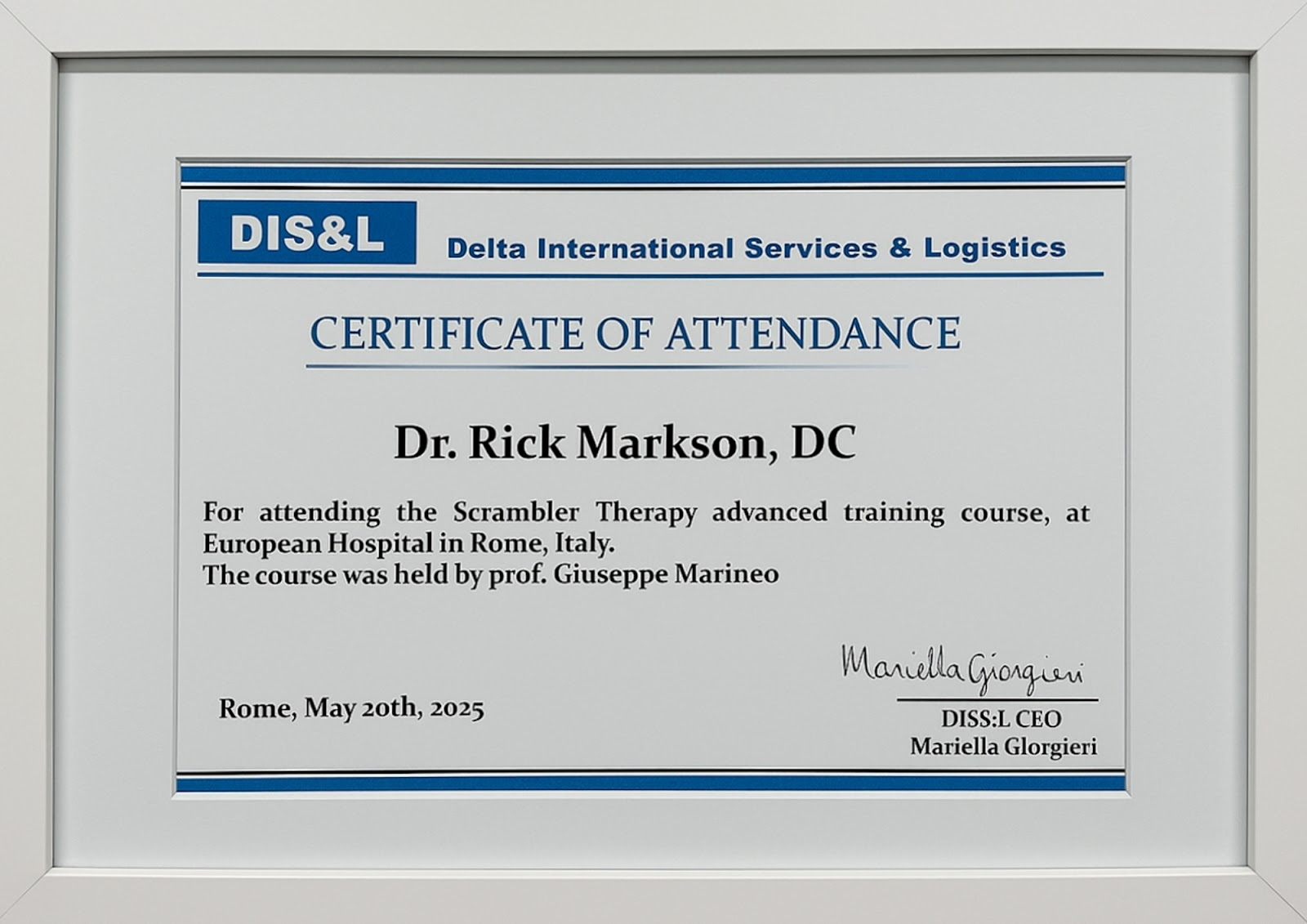
Discover South Florida Scrambler Therapy is one of the nation’s leading clinics for noninvasive chronic pain relief, offering FDA-cleared Scrambler Therapy® for adults and children. Co-founded by Dr. Rick Markson, one of the few practitioners worldwide to receive advanced certification directly from the therapy’s inventor in Rome, our clinic delivers globally recognized expertise with compassionate, personalized care. If you or a loved one is living with treatment-resistant nerve pain, we invite you to schedule a consultation and explore a life beyond pain.
📘 What is scrambler therapy?
📘 What to Expect During a Scrambler Session
📘 CRPS Pain Relief Without Drugs—Real Patient Stories
📘 Conditions that scrambler therapy can treat
Keep up to date with important news about our clinic and your medical records.


.svg)
.svg)
.svg)