.webp)

CIPN is nerve damage caused by chemotherapy. It commonly affects sensory nerves and leads to symptoms like tingling, burning, numbness, and shooting pain—typically in the hands and feet. These symptoms reflect axonal damage and are a direct consequence of neurotoxic cancer treatments.
Peripheral neuropathy from chemo disrupts daily functions like walking, sleeping, and even holding objects. The damage primarily targets sensory neurons in the dorsal root ganglia, leading to persistent cancer-induced nerve pain.
Next, we’ll explore the biological mechanisms behind CIPN.
Chemotherapy-induced peripheral neuropathy develops when anticancer agents damage peripheral nerves through multiple pathophysiological mechanisms.
Chemo-induced nerve injury affects both the structure and function of neurons, resulting in long-term neuropathic pain and nerve inflammation. This complexity makes CIPN difficult to treat with conventional pharmacotherapy.
Let’s now look at how Scrambler Therapy offers a non-drug alternative.
Scrambler Therapy is a non-invasive neurostimulation technique approved by the FDA for the treatment of chronic neuropathic pain, including CIPN.
Scrambler Therapy overview research has shown it to be an effective alternative CIPN treatment, with minimal side effects and non-drug pain relief benefits.
Now we’ll examine the clinical studies supporting its effectiveness in CIPN.
Multiple randomized controlled trials (RCTs) and observational studies validate the clinical impact of Scrambler Therapy in treating chemotherapy-induced peripheral neuropathy.
Scrambler Therapy CIPN studies repeatedly show clinically meaningful reductions in neuropathic pain, even when other treatments have failed.
Let’s compare Scrambler Therapy with other commonly used therapies.
Scrambler Therapy outperforms several traditional treatments for cancer-induced nerve pain, both in efficacy and tolerability.
Duloxetine vs Scrambler Therapy: Scrambler offers faster pain reduction with fewer adverse effects.
Acupuncture for nerve pain shows some promise but lacks strong evidence in CIPN-specific trials.
We’ll now explore how Scrambler Therapy actually reprograms pain signaling.
Scrambler Therapy works through neuromodulation, where artificial non-pain signals are sent via afferent nerves to remap the brain’s pain memory.
This pain transmission block leads to central nervous system (CNS) reprogramming, where the brain “forgets” chronic pain patterns. This somatosensory reconditioning is especially beneficial for long-standing CIPN cases.
Who benefits most? Let’s look at patient profiles.
Not all CIPN patients respond equally. Ideal candidates show specific characteristics.
Scrambler Therapy CIPN patients often have exhausted other options. A risk-benefit analysis by the treating physician is essential before initiating therapy.
Now let’s break down the typical therapy protocol.
The therapy follows a structured regimen aimed at progressive pain reduction and nerve reprogramming.
Progress is tracked using VAS scores, pain tracking diaries, and session feedback. Dose titration ensures personalized stimulation levels.
Let’s review real patient experiences.
Real-world evidence shows Scrambler Therapy success stories across diverse patient profiles.
Quality of life scores improved, and functional recovery allowed patients to reduce or stop medications. These outcomes reinforce patient-reported outcomes in clinical trials.
Let’s now consider safety.
Scrambler Therapy has an excellent safety profile with minimal adverse events.
There’s no risk of nerve overstimulation, as the signals mimic normal sensory inputs. Precaution protocols include avoiding use in patients with implanted electrical devices (e.g., pacemakers).
Most patients tolerate the therapy well and complete full protocols.
Let’s discuss cost and accessibility.
Scrambler Therapy is reimbursable under certain CPT codes depending on insurer and location.
Patients are advised to contact in-network providers and verify insurance approval for affordable care.
To wrap up, we’ll answer common questions.
Yes, especially for neuropathy from taxanes, platinum-based drugs, and vinca alkaloids.
Relief typically lasts 3 to 12 months, with some reporting long-term remission.
No, but it can significantly reduce pain and improve function, even in chronic cases.
Yes. Those with implanted electrical devices (e.g. pacemakers) or severe skin conditions at the treatment site.
Scrambler shows faster onset, fewer side effects, and better adherence compared to duloxetine, especially for refractory CIPN.
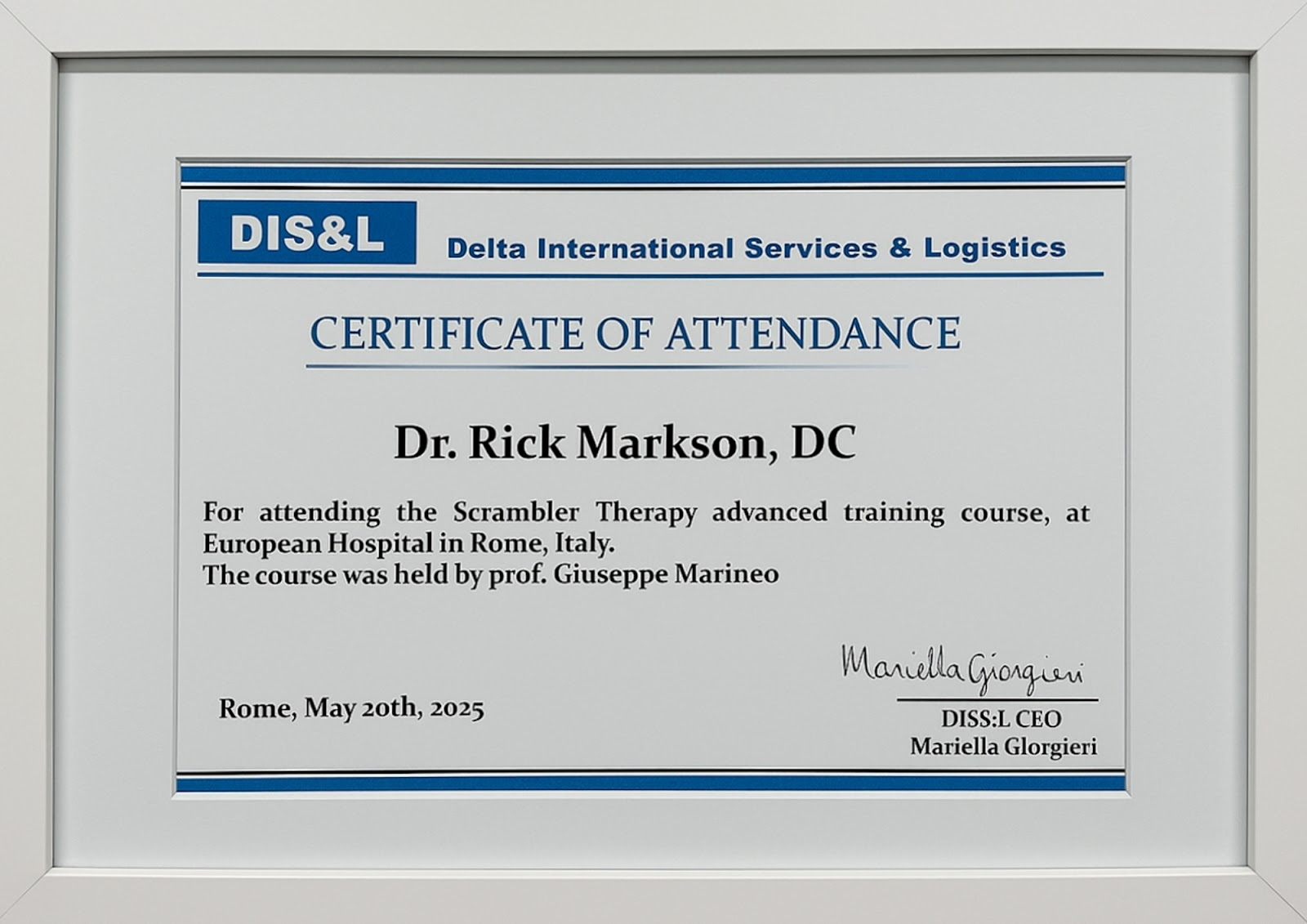
Discover South Florida Scrambler Therapy is one of the nation’s leading clinics for noninvasive chronic pain relief, offering FDA-cleared Scrambler Therapy® for adults and children. Co-founded by Dr. Rick Markson, one of the few practitioners worldwide to receive advanced certification directly from the therapy’s inventor in Rome, our clinic delivers globally recognized expertise with compassionate, personalized care. If you or a loved one is living with treatment-resistant nerve pain, we invite you to schedule a consultation and explore a life beyond pain.
📘 What is scrambler therapy?
📘 What to Expect During a Scrambler Session
📘 CRPS Pain Relief Without Drugs—Real Patient Stories
📘 Conditions that scrambler therapy can treat
Keep up to date with important news about our clinic and your medical records.




.svg)
.svg)
.svg)