.webp)
Meralgia paresthetica is a neuropathic condition caused by compression of the lateral femoral cutaneous nerve (LFCN), a sensory nerve responsible for feeling along the outer thigh.
This nerve travels from the lower spine, across the pelvis, and passes beneath the inguinal ligament—an area where it is particularly vulnerable to compression. When pressure occurs, normal nerve signaling may become disrupted, leading to abnormal sensations such as burning, tingling, or numbness.
Importantly, because this nerve is purely sensory, muscle strength and movement are typically unaffected, which helps distinguish this condition from other nerve or spinal disorders.
Symptoms of meralgia paresthetica can vary in intensity but commonly include:
These symptoms may develop gradually and, in some cases, can interfere with daily activities or sleep.
It may be appropriate to consult a healthcare provider if:
Early evaluation can help rule out other conditions and guide appropriate management, particularly if symptoms are progressive.
Meralgia paresthetica is most commonly associated with nerve compression, which may result from mechanical, metabolic, or inflammatory factors.
Ongoing compression may interfere with normal nerve signaling, leading to altered sensory input that can be perceived as pain, tingling, or numbness.
Accurate diagnosis is important to distinguish meralgia paresthetica from conditions such as lumbar radiculopathy.
Healthcare providers typically assess:
A combination of clinical assessment and imaging is often used to improve diagnostic accuracy.
Treatment typically depends on symptom severity, underlying cause, and duration. In many cases, conservative approaches are considered first-line.
These changes may help reduce pressure on the affected nerve.
Healthcare providers may recommend medications such as:
These are generally used to help manage symptoms, although responses can vary.
Targeted physical therapy may help:
Some patients report symptom improvement with guided rehabilitation programs.
Local anesthetic or corticosteroid injections may be used to:
The duration and effectiveness of relief can differ between individuals.
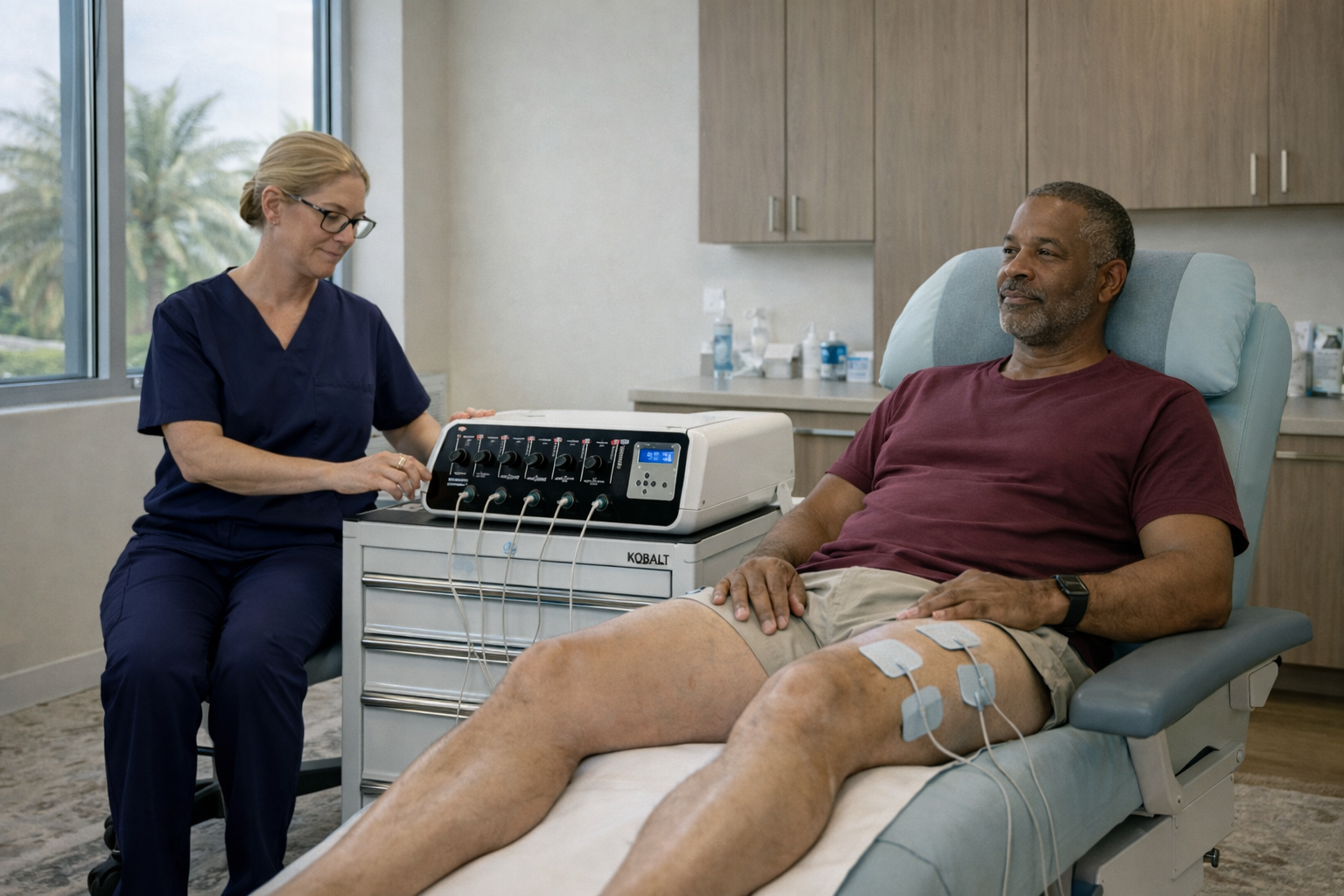
Scrambler Therapy (Calmare®) is a non-invasive neuromodulation treatment that has been studied for chronic neuropathic pain conditions.
Some studies, including research by Marineo et al., suggest that Scrambler Therapy may help reduce neuropathic pain in certain patients. However:
Because of this, it is generally considered an adjunct or alternative option, particularly for patients who do not respond to conventional treatments.
Meralgia paresthetica is often manageable, especially when underlying causes are addressed early.
Meralgia paresthetica is generally not considered life-threatening, but it can be uncomfortable and disruptive to daily life. Because it affects a sensory nerve, it typically does not cause muscle weakness. However, persistent or worsening symptoms should still be evaluated by a healthcare professional to rule out other conditions.
In some cases, symptoms may improve or resolve with conservative measures such as avoiding tight clothing, weight management, or reducing pressure on the nerve. However, recovery varies from person to person, and some individuals may require additional treatment if symptoms persist.
Meralgia paresthetica involves compression of a sensory nerve in the thigh, while sciatica typically involves irritation of a spinal nerve root affecting the lower back and leg. Sciatica may include weakness or radiating pain down the leg, whereas meralgia paresthetica usually causes localized sensory symptoms in the outer thigh without muscle involvement.
Treatment often begins with conservative approaches such as lifestyle modifications, medications for nerve pain, and physical therapy. In some cases, nerve blocks or other interventions may be considered. Emerging treatments like Scrambler Therapy are also being studied, though results may vary and evidence is still developing.
You may consider seeing a specialist if symptoms persist despite initial treatments, become more severe, or interfere with daily activities. A specialist can help confirm the diagnosis and recommend a more personalized treatment plan based on your condition.
This content is intended for educational purposes only and does not constitute medical advice, diagnosis, or treatment. Always consult a qualified healthcare provider regarding any medical condition or treatment decisions.
Keep up to date with important news about our clinic and your medical records.




.svg)
.svg)
.svg)