.webp)
Pain that lasts longer than expected often brings more than just physical symptoms. Many people start to worry that healing has failed or that something has been overlooked. Chronic pain is not a sign of personal weakness. In many cases, it reflects how the nervous system adapts to ongoing pain signals through a process called neuroplasticity.
Understanding neuroplasticity provides a clear explanation for why pain may persist after tissues heal, and why recovery remains possible.
Neuroplasticity is the nervous system's ability to change its structure and function in response to experience. It allows the brain and spinal cord to:
In the context of pain, neuroplasticity explains how the nervous system can reinforce pain circuits when exposed to repeated nociceptive input. The more pain signals the system processes, the more efficiently it can reproduce them — even without ongoing injury.
Research shows that repeated pain can lead to long-term potentiation (LTP) in dorsal horn neurons, making them hypersensitive (Woolf & Salter, 2000).
Acute pain alerts the body to potential harm. It promotes rest and tissue repair. The brain interprets incoming signals as temporary warnings tied to physical injury.
When pain continues, sensory neurons become more excitable. Repeated activation strengthens pain-related pathways in the brain and spinal cord. This process is called central sensitization.
Neural circuits learn pain like a skill. No injury is needed to maintain it.
As pain becomes chronic, specific neurophysiological changes occur:
These adaptations explain symptoms like:
fMRI studies confirm cortical reorganization in chronic pain patients (Flor et al., 1997).
Yes. Neuroplastic changes are physical, not imaginary. They can be seen with:
Chronic pain is real even when it reflects nervous system adaptation instead of tissue damage. Saying pain is “just in the brain” misunderstands how biological learning systems work.
Sensitized pain systems may react to:
This is known as allodynia or hyperalgesia, both hallmarks of central sensitization.
The nervous system becomes overly protective, like a smoke detector that activates at steam. This heightened vigilance often misinterprets non-threatening input as pain.
Patients often describe:
Understanding neuroplasticity helps reduce:
Education changes behavior. Patients who understand neuroplastic pain are more likely to re-engage in recovery.
Yes. Neuroplasticity is bidirectional. The same mechanisms that reinforce pain can support healing. With consistent input, the brain can rewire toward safety, efficiency, and comfort.
Effective strategies include:
These inputs reshape neural responses and promote desensitization.
Fear increases pain sensitivity. Confusion adds stress and promotes avoidance. When patients understand how pain persists and why, they are more likely to:
Knowledge reduces threat. Reduced threat lowers pain.
No. Neuroplasticity explains why pain persists, but also why it can change. While total pain relief may not always be possible, people can:
Change starts with understanding how the system works.
“Once I learned my nervous system could change, I stopped feeling hopeless.”
“This explanation helped me stop blaming myself for my pain.”
Neuroplasticity refers to how the nervous system changes over time, including learning persistent pain patterns.
Pain pathways can remain sensitized even when tissues recover.
Not always. Chronic pain often reflects nervous system adaptation.
The nervous system can change in positive directions with appropriate care.
No. Neuroplastic changes are physical and measurable.
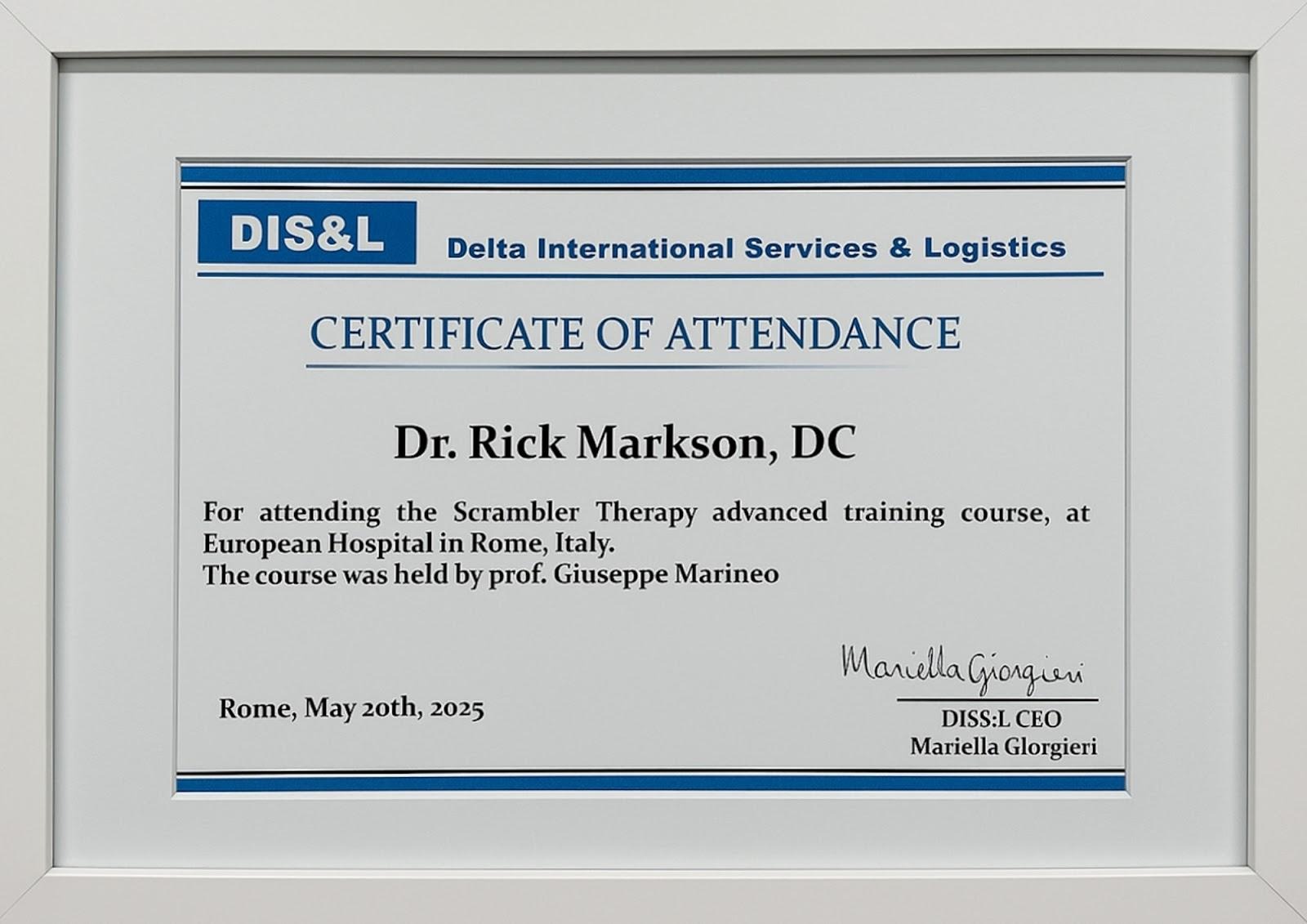
Discover South Florida Scrambler Therapy is one of the nation’s leading clinics for noninvasive chronic pain relief, offering FDA-cleared Scrambler Therapy® for adults and children. Co-founded by Dr. Rick Markson, one of the few practitioners worldwide to receive advanced certification directly from the therapy’s inventor in Rome, our clinic delivers globally recognized expertise with compassionate, personalized care. If you or a loved one is living with treatment-resistant nerve pain, we invite you to schedule a consultation and explore a life beyond pain.
Scrambler Therapy FDA FDA 510(k) database
Scrambler Therapy delivers 80%–90% pain reduction for patients suffering from nerve-related pain.
Pain Physician Journal study on Scrambler Therapy’s effectiveness
Scrambler therapy is a non-invasive, opioid-sparing treatment for chronic pain.
📘 What is scrambler therapy?
📘 What to Expect During a Scrambler Session
📘 CRPS Pain Relief Without Drugs—Real Patient Stories
📘 Conditions that scrambler therapy can treat
This article is for educational purposes only and does not replace medical advice. Chronic pain conditions vary. Always consult a qualified healthcare provider for diagnosis and treatment planning.
Keep up to date with important news about our clinic and your medical records.



.svg)
.svg)
.svg)