.webp)
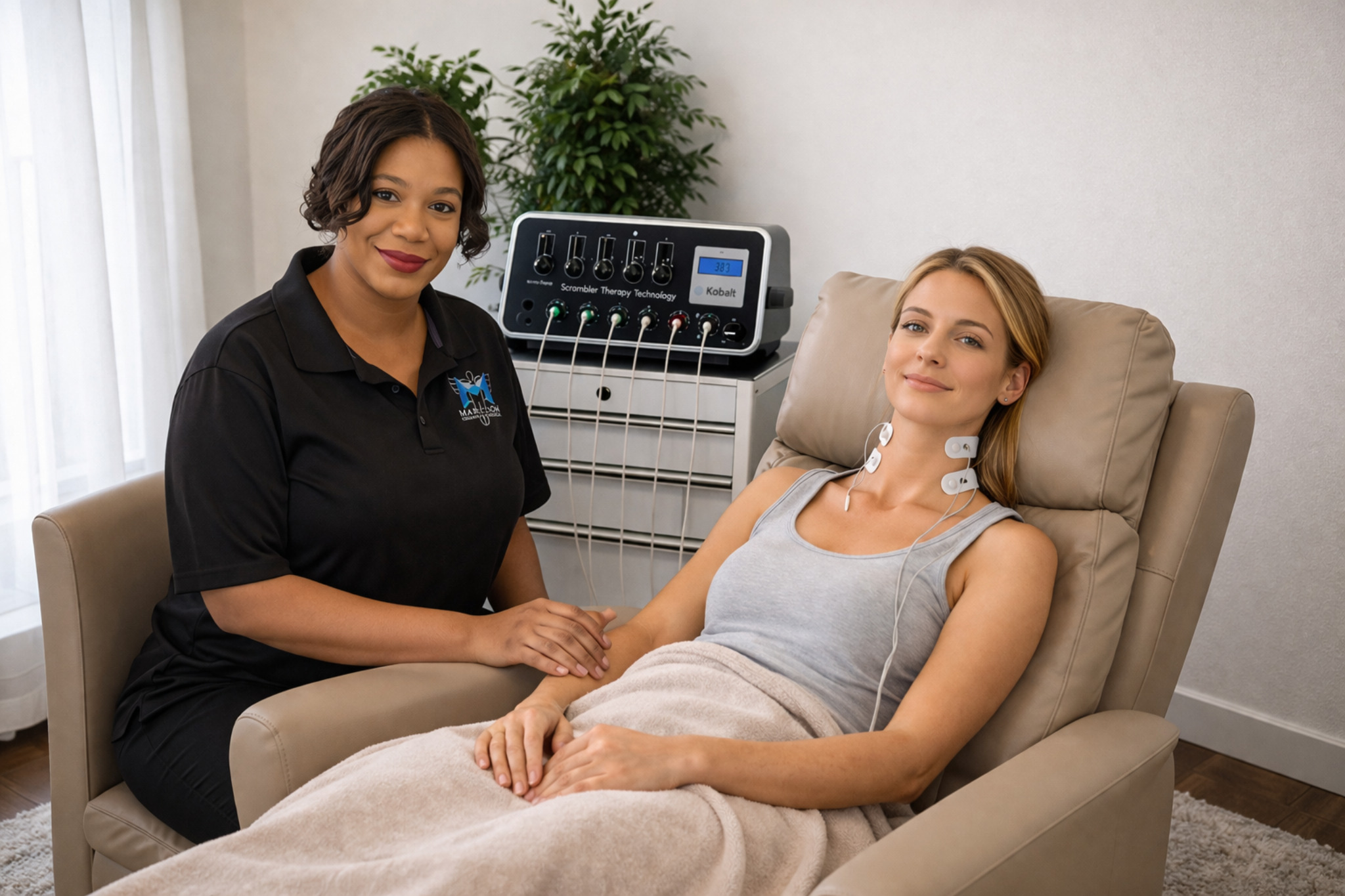
Chronic migraine is a neurological condition that causes headache symptoms 15 or more days a month. In contrast, episodic migraine appears less than 15 days monthly. Migraine becomes chronic when it lasts over 3 months and leads to significant disability.
Neuropathic pain in the head and neck often involves the cranial nerves. Common types include:
Migraine-related nerve pain is often persistent and hard to treat. It becomes entrenched in the nervous system due to neuroplastic changes and cortical sensitization.
Next, we’ll explore how a non-invasive, drug-free treatment—Scrambler Therapy—offers new hope.
For persistent nerve pain, the FDA has approved Scrambler Therapy as a non-invasive treatment. It uses a device—such as the Calmare® system, developed by Delta Research & Development—that reprograms how the brain interprets pain signals.
The therapy uses a process called neuromodulation, meaning it alters nerve activity without drugs, needles, or invasive procedures.
This pain signal replacement therapy does not block nerves or dull sensations; instead, it replaces pain messages with synthetic "no pain" signals.
Now, let’s see how this approach specifically affects migraine pathways.
Scrambler Therapy modulates the trigeminal nerve and reverses chronic migraine sensitization. Migraine pain becomes chronic through a process known as migraine chronification—where the brain forms a memory of pain.
Through neuroplastic reprogramming, it re-teaches the brain to interpret pain signals correctly. This can reduce or eliminate long-term migraine symptoms and improve quality of life.
Patients often experience relief after just a few sessions, and many report reduced dependence on medications.
In the next section, we examine how this therapy also benefits those with nerve-related head and neck conditions.
Scrambler Therapy is effective for nerve syndromes like occipital neuralgia, cervical radiculopathy, and facial neuropathy.
These conditions involve:
Unlike nerve blocks or long-term medications, Scrambler is drug-free, pain-free, and repeatable without diminishing results.
Let’s now explore the scientific evidence behind these benefits.
Clinical trials show Scrambler Therapy reduces pain scores in patients with migraines and neuropathy.
A meta-analysis in PubMed found that over 70% of patients reported significant pain reduction. Studies from the NIH and Pain Management Journal confirm:
Some studies note limitations in long-term data and sample diversity, but overall results are promising for migraineurs and nerve pain patients.
Now, how does Scrambler compare to other treatments like Botox or TENS?
Scrambler Therapy is often compared to:
Scrambler stands out as a sustainable, drug-free option with low risk of rebound or dependency. Next, we walk you through what to expect in a typical therapy session.
Each Scrambler session is:
Patients usually undergo 10–12 sessions over 2–3 weeks. You don’t need to stop your regular activities and no side effects are expected.
Now, who’s eligible for this therapy?
Not all patients are candidates for Scrambler Therapy. Eligibility depends on diagnosis, duration of pain, and general health.
A pain clinic will conduct a medical evaluation and determine your treatment candidacy.
Let’s now look at the safety data.
Scrambler Therapy has a strong safety profile and is cleared by the FDA for chronic pain treatment.
Compared to medications, Scrambler Therapy avoids:
Pain clinics rate it as a risk-free, discomfort-free therapy for chronic migraine and nerve pain.
Let’s now see how real patients respond to it in real-world scenarios.
Patient testimonials consistently highlight pain reduction and quality-of-life improvements.
Example: A 42-year-old migraine patient reduced her attack frequency from 20 days to 4 days per month after 10 sessions. Another patient with occipital neuralgia reported complete pain remission for 8 months post-treatment.
Clinics often use pain diaries to track changes, showing clear before-after data.
Now, here’s how to access this treatment.
Pain clinics across the US and globally offer this therapy. Some provide in-network options to lower out-of-pocket costs.
Now we’ll answer some of the most searched questions on Scrambler Therapy.
Yes, it reduces migraine frequency and pain intensity by modulating trigeminal nerve pathways.
Relief often begins within 3–5 sessions; full benefits appear by session 10.
10 to 12 sessions are standard for long-term effect.
Some plans cover it; check with Medicare or private insurer.
Yes, it’s effective for occipital neuralgia, trigeminal pain, and facial nerve syndromes.
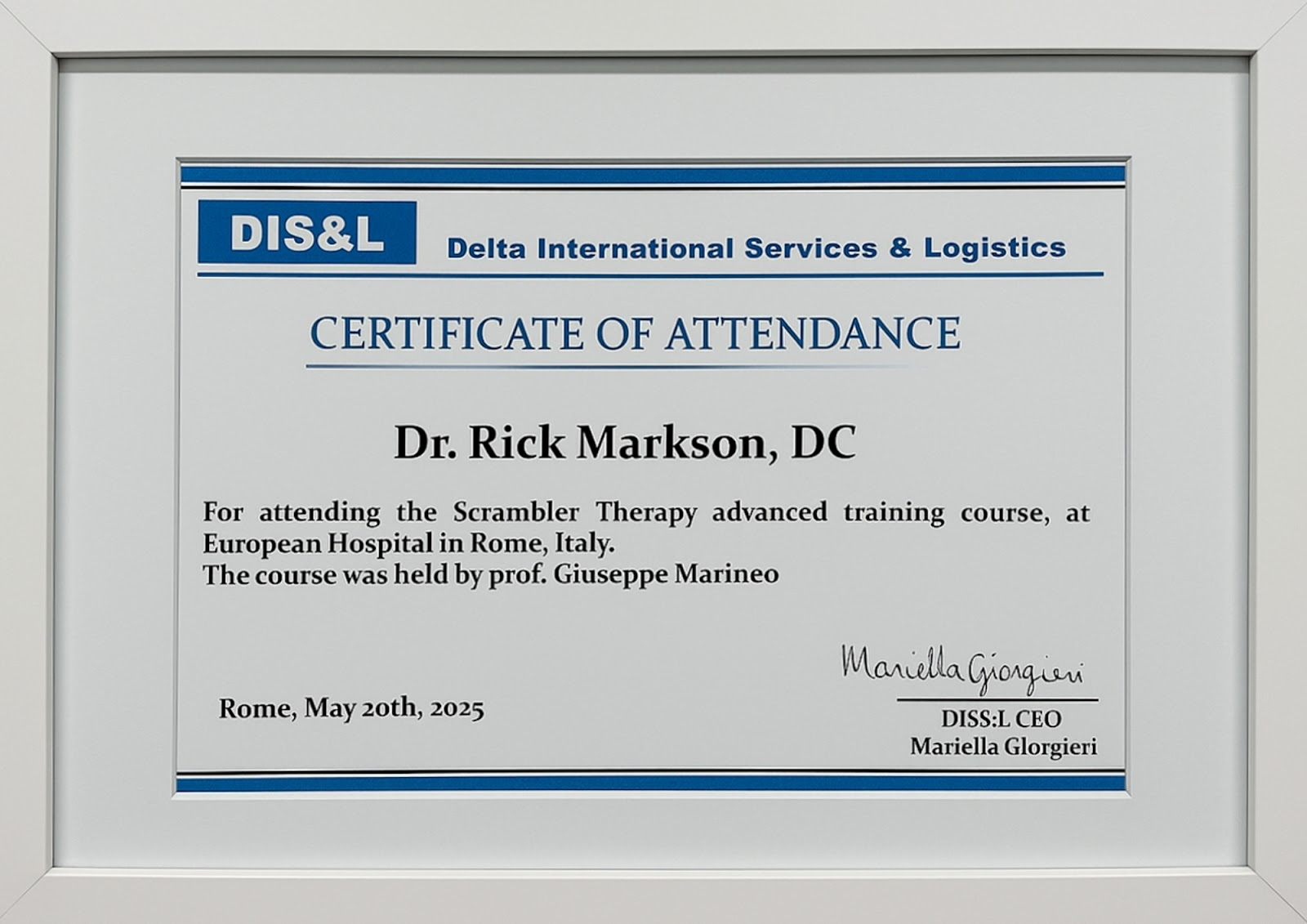
Discover South Florida Scrambler Therapy is one of the nation’s leading clinics for noninvasive chronic pain relief, offering FDA-cleared Scrambler Therapy® for adults and children. Co-founded by Dr. Rick Markson, one of the few practitioners worldwide to receive advanced certification directly from the therapy’s inventor in Rome, our clinic delivers globally recognized expertise with compassionate, personalized care. If you or a loved one is living with treatment-resistant nerve pain, we invite you to schedule a consultation and explore a life beyond pain.
📘 What is scrambler therapy?
📘 What to Expect During a Scrambler Session
📘 CRPS Pain Relief Without Drugs—Real Patient Stories
📘 Conditions that scrambler therapy can treat
Keep up to date with important news about our clinic and your medical records.




.svg)
.svg)
.svg)