.webp)
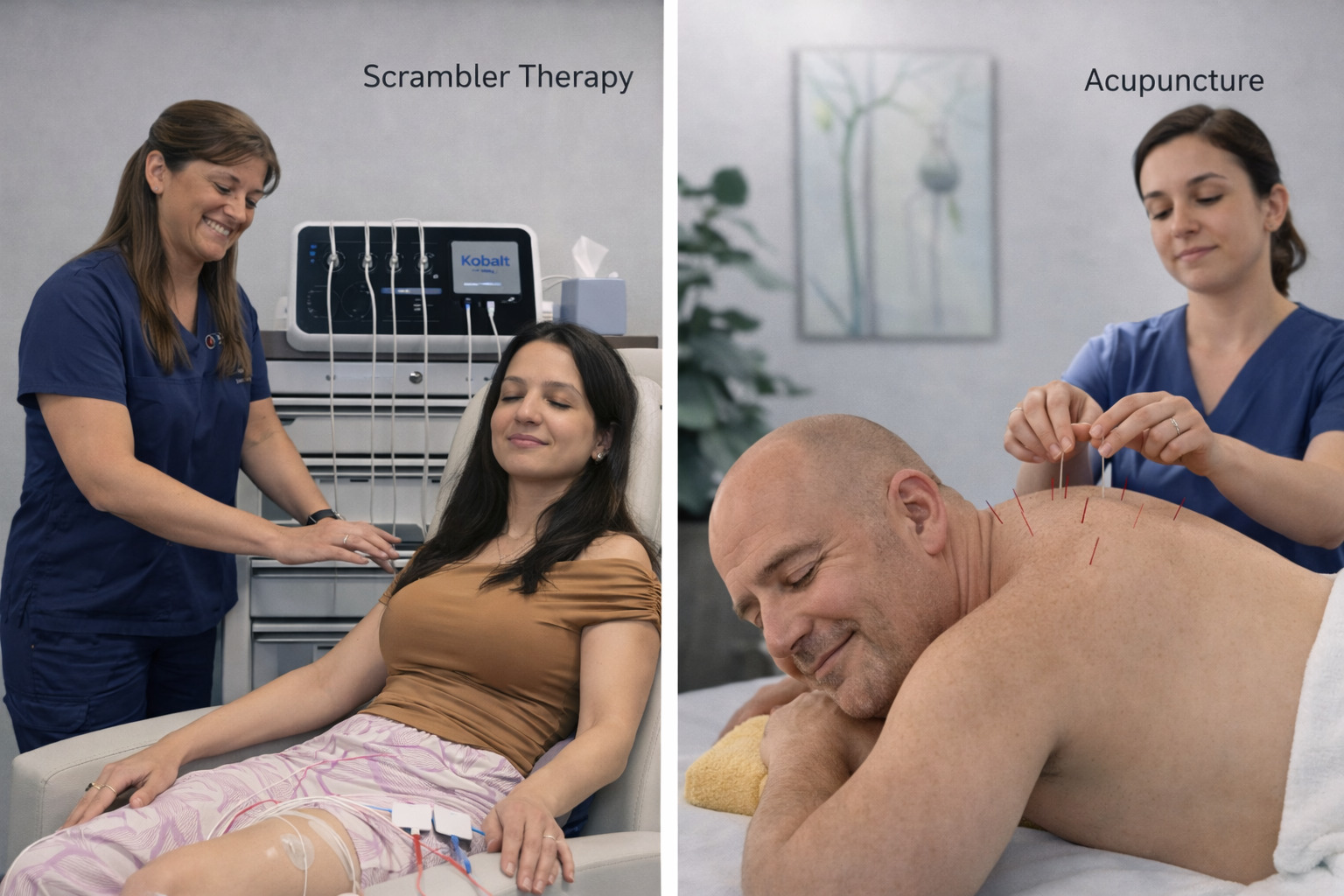
When you're living with persistent nerve pain, choosing the right treatment can feel overwhelming. You hear about acupuncture, nerve blocks, Scrambler Therapy, and dozens of other options—but what’s the actual difference? What works, and what’s just another label?
This guide explains the key differences between Scrambler Therapy and acupuncture, how each works, and how to choose the best fit based on your symptoms and goals.
We cover:
→ How It Works
→ Conditions We Treat
Neuropathic pain results from abnormal nerve function, not from tissue injury alone. It often feels like:
Pain from joints or muscles tends to feel dull, sore, or linked to movement. Many people have mixed pain, so accurate assessment is critical.
Acupuncture is a traditional therapy using fine needles at specific body points. It does not directly target nerves, but may indirectly influence pain modulation systems.
Note: The effectiveness of acupuncture for neuropathic pain varies by case and contributing factors.
Scrambler Therapy is an FDA-cleared, non-invasive treatment developed for chronic neuropathic pain. It uses surface electrodes to deliver non-pain signals to the nerves.
Scrambler Therapy is not a TENS unit. It uses different protocols and signal algorithms focused on neuropathic pain correction.
Yes, some patients benefit from combining both—but sequencing and focus matter.
Ask yourself:
If the approach feels random or unfocused, it may lead to wasted time or cost.
Most patients exploring Scrambler Therapy vs acupuncture want clarity—not a long list of options.
At our clinic, we start with:
The goal is always a coherent, trackable plan that respects your time, budget, and goals.
Bring these to your next consultation:
These questions help avoid trial-and-error approaches and save time.
If your symptoms match a neuropathic pain pattern, Scrambler Therapy is a focused and evidence-backed option. If your pain is more tension-based, systemic, or stress-driven, acupuncture may be a better fit.
Clarity in mechanism and intent leads to better outcomes. Avoid “trying everything” without structure.
This article is for educational purposes only. It does not replace medical advice. Consult a licensed provider to determine appropriate care for your condition.
Scrambler Therapy targets chronic nerve pain signaling. Acupuncture modulates overall nervous system tone and muscle tension.
For clearly neuropathic pain (burning, zapping, tingling), Scrambler Therapy is often more effective due to its direct mechanism.
Yes, if managed strategically. Consult your provider to ensure clarity in goals and timing.
Most treatment protocols include 10–12 sessions delivered over 2–3 weeks for best results.
Some patients with mixed or stress-driven pain report short-term relief, but results vary based on cause and severity.
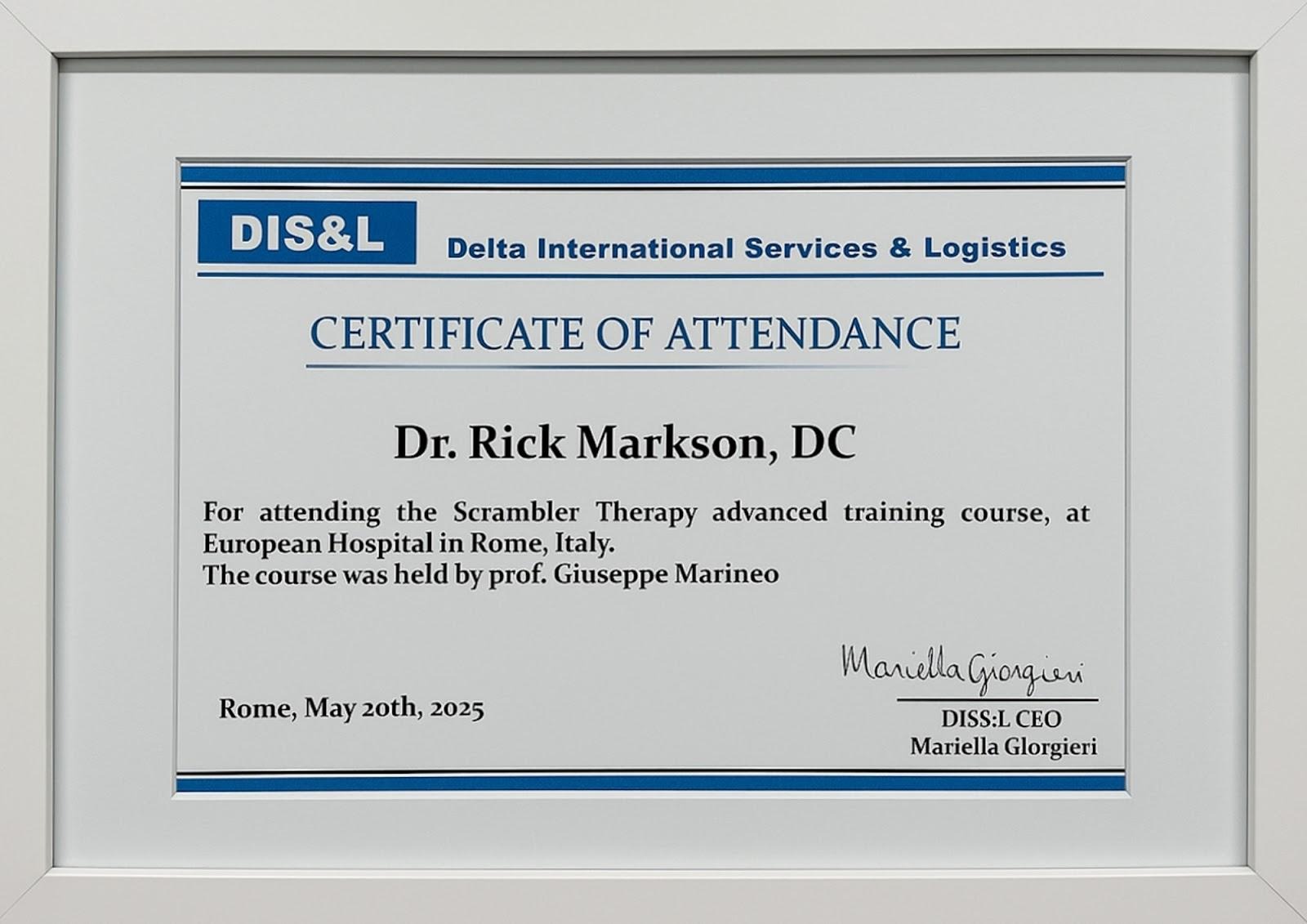
Discover South Florida Scrambler Therapy is one of the nation’s leading clinics for noninvasive chronic pain relief, offering FDA-cleared Scrambler Therapy® for adults and children. Co-founded by Dr. Rick Markson, one of the few practitioners worldwide to receive advanced certification directly from the therapy’s inventor in Rome, our clinic delivers globally recognized expertise with compassionate, personalized care. If you or a loved one is living with treatment-resistant nerve pain, we invite you to schedule a consultation and explore a life beyond pain.
Scrambler Therapy FDA FDA 510(k) database
Scrambler Therapy delivers 80%–90% pain reduction for patients suffering from nerve-related pain.
Pain Physician Journal study on Scrambler Therapy’s effectiveness
Scrambler therapy is a non-invasive, opioid-sparing treatment for chronic pain.
📘 What is scrambler therapy?
📘 What to Expect During a Scrambler Session
📘 CRPS Pain Relief Without Drugs—Real Patient Stories
📘 Conditions that scrambler therapy can treat
Keep up to date with important news about our clinic and your medical records.




.svg)
.svg)
.svg)