Scrambler Therapy vs Nerve Blocks: Pros, Cons, and Timing

Nerve pain can be persistent, unpredictable, and difficult to manage. If you’re exploring treatment options, you may be deciding between a non-invasive neuromodulation approach and an injection-based intervention.
This guide explains the key differences between Scrambler Therapy and nerve block injections, using clinical context and evidence-based insights to help you choose the most appropriate option.
What Defines Each Treatment?
Although both approaches aim to reduce pain, they work in fundamentally different ways:
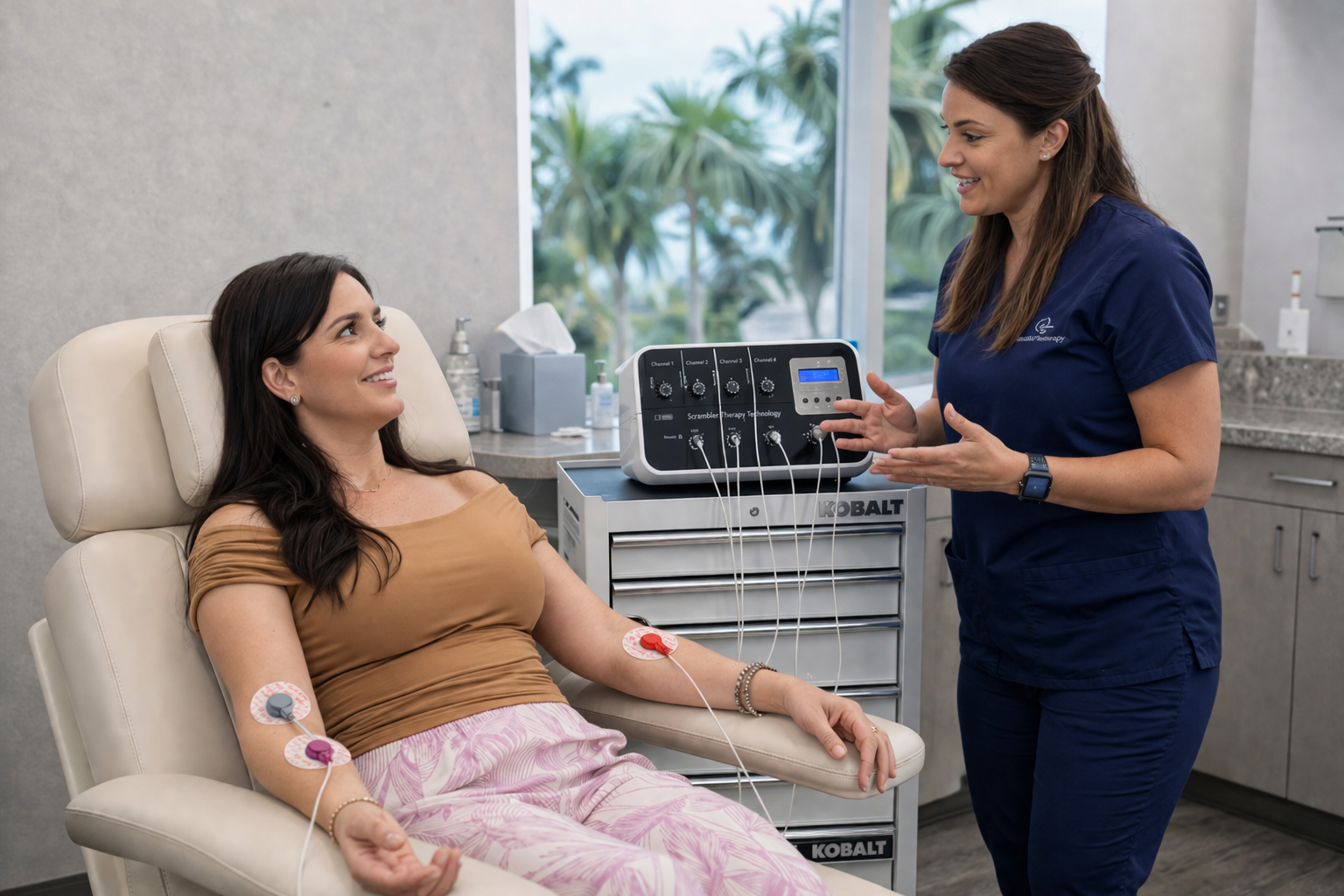
- Scrambler Therapy uses non-invasive electrical stimulation applied through the skin to influence pain signaling
- Nerve Block Injections deliver local anesthetics (often combined with corticosteroids) directly near affected nerves
How Do They Target Pain?
- Scrambler Therapy modulates C-fiber and A-delta fiber signaling, helping retrain abnormal pain perception
- Nerve blocks inhibit pain transmission via sodium channel blockade, stopping nerve impulses
👉 Research shows scrambler therapy works by replacing pain signals with synthetic “non-pain” information processed by the nervous system. (NIH)
Which Pain Types Respond Best?
- Scrambler Therapy is most effective for chronic neuropathic pain
- Nerve blocks are commonly used for acute inflammatory or structural pain
👉 Mayo Clinic notes that nerve blocks are often used for diagnostic and therapeutic relief in conditions involving nerve irritation or inflammation.
https://www.mayoclinic.org/tests-procedures/nerve-block/about/pac-20393962
Why Diagnosis Matters
Treatment selection depends on identifying whether pain is driven by long-term nerve dysfunction or short-term inflammation. A structured evaluation improves outcomes and reduces unnecessary procedures.
How Scrambler Therapy and Nerve Blocks Work in the Nervous System
These treatments differ not only in application but also in neurological impact.
Scrambler Therapy Mechanism
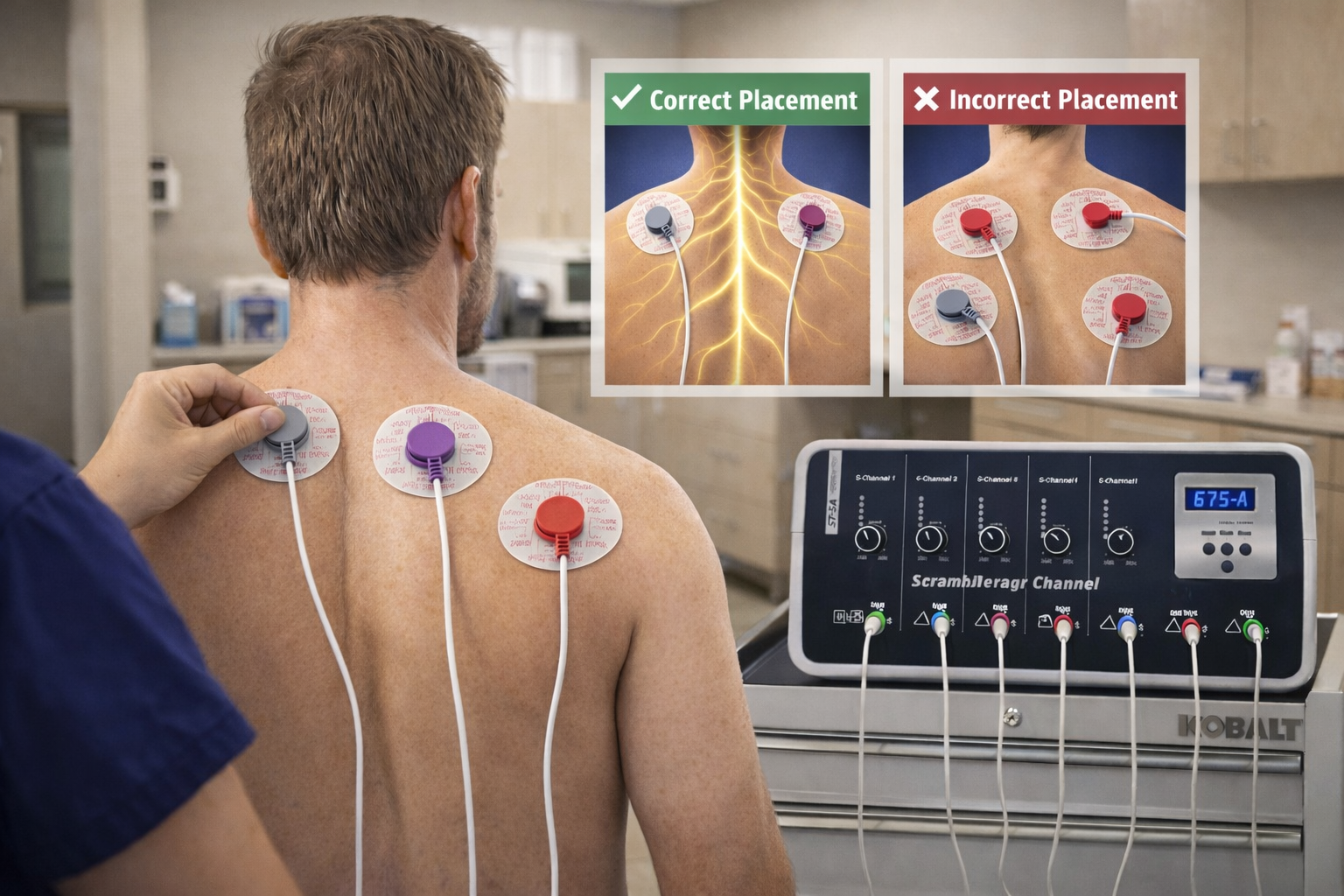
Scrambler Therapy (often delivered via Calmare®) sends artificial “non-pain” signals through surface electrodes. This process:
- Alters synaptic transmission
- Modifies neurotransmitter release
- Reduces abnormal nociceptor activity
👉 Studies in Journal of Pain and Symptom Management show significant pain reduction in neuropathy patients treated with scrambler therapy.
Over time, this supports neuroplasticity, helping the brain reinterpret pain signals.
Nerve Block Mechanism
Nerve blocks involve injections near structures like the dorsal root ganglion:
- Stop action potentials
- Temporarily suppress nerve firing
- Reduce inflammation when steroids are used
👉 According to Cleveland Clinic, nerve blocks can also help diagnose the source of pain by selectively numbing specific nerves.
https://my.clevelandclinic.org/health/treatments/12051-nerve-blocks
Long-Term Impact
- Scrambler Therapy aims for long-term modulation of pain pathways
- Nerve blocks provide temporary interruption without retraining the nervous system
Conditions Treated with Scrambler Therapy vs Nerve Blocks
Matching treatment to condition improves effectiveness.
Conditions Treated with Scrambler Therapy
- Chemotherapy-Induced Peripheral Neuropathy (CIPN)
- Complex Regional Pain Syndrome (CRPS)
- Postherpetic Neuralgia
👉 The National Cancer Institute recognizes scrambler therapy as a treatment option for chemotherapy-related neuropathic pain.
https://www.cancer.gov/about-cancer/treatment/side-effects/pain/scrambler-therapy-pdq
These involve abnormal nerve signaling rather than inflammation alone.
Conditions Treated with Nerve Blocks
- Sciatica
- Lumbar Disc Herniation
- Acute nerve inflammation or compression
👉 Mayo Clinic confirms nerve blocks are often used for spinal and nerve root-related pain conditions.
https://www.mayoclinic.org/tests-procedures/nerve-block/about/pac-20393962
How Symptoms Guide Treatment
- Burning, tingling pain → neuropathic → Scrambler Therapy
- Sharp, radiating pain → structural → nerve blocks
Pros and Cons of Scrambler Therapy vs Nerve Blocks
Benefits of Scrambler Therapy
- Non-invasive and FDA-cleared
- No injection-related risks
- Can be repeated safely
👉 FDA-cleared scrambler therapy devices (like Calmare®) are designed for chronic pain management. (FDA)
Limitations
- Requires multiple sessions
- Does not treat structural compression
Benefits of Nerve Blocks
- Fast-acting pain relief
- Precise targeting
- Reduces inflammation
Risks
- Infection at injection site
- Temporary soreness
- Possible steroid-related side effects
- Pain recurrence
👉 Cleveland Clinic notes that repeated steroid injections may carry risks such as tissue damage or systemic effects. (Cleveland Clinic)
Durability Comparison
Scrambler Therapy focuses on long-term adaptation, while nerve blocks often require repeat procedures.
When to Choose Scrambler Therapy vs Nerve Blocks
When Nerve Blocks Are Appropriate
- Acute inflammatory pain
- Early-stage sciatica
- Diagnostic procedures
When Scrambler Therapy Is Appropriate
- Chronic neuropathic pain
- Failed injection history
- Preference to avoid steroids
👉 Evidence suggests neuromodulation approaches are particularly useful in chronic neuropathic conditions where traditional interventions fail. (Pubmed)
Key Decision Factors
- Pain duration
- Functional impairment
- Medication history
- Imaging findings
A personalized plan ensures better outcomes.
What to Expect During Treatment
Scrambler Therapy
- Electrodes applied to skin
- Mild tingling sensation
- 30–60 minutes per session
- Multiple sessions over 1–2 weeks
Nerve Block
- Image-guided injection
- Local anesthetic ± steroid
- Short recovery period
👉 Mayo Clinic describes nerve block procedures as quick interventions typically performed with imaging guidance. (Mayo Clinic)
Experience Comparison
- Scrambler Therapy builds gradually
- Nerve blocks provide immediate but temporary relief
FAQs
Is Scrambler Therapy safer long-term?
Yes. It avoids injections and steroids, reducing infection and systemic risks.
Which is better for neuropathy?
Scrambler Therapy often shows better outcomes due to its ability to retrain pain pathways. (Pubmed)
How long are sessions?
- Scrambler: 30–60 minutes
- Nerve block: 15–30 minutes
Who qualifies?
- Chronic neuropathy → Scrambler
- Acute inflammation → nerve block
Are these alternatives to surgery or opioids?
Yes. Both are conservative treatments that may reduce reliance on invasive procedures or long-term medications.
Medical Disclaimer
This content is for informational purposes only and does not constitute medical advice. Always consult a qualified healthcare provider before starting any treatment.
Find the Right Approach for Your Nerve Pain
You don’t need to guess which treatment fits your condition. A structured evaluation helps determine whether Scrambler Therapy or nerve blocks align with your diagnosis.
At our clinic, we focus on:
- Evidence-based, non-surgical solutions
- Personalized treatment plans
- Advanced neuromodulation for chronic pain
Schedule your consultation today or call 954-476-6661 to take the next step toward long-term relief.
Patient Reviews
Start Your Nerve Pain-Free Journey Today