.webp)
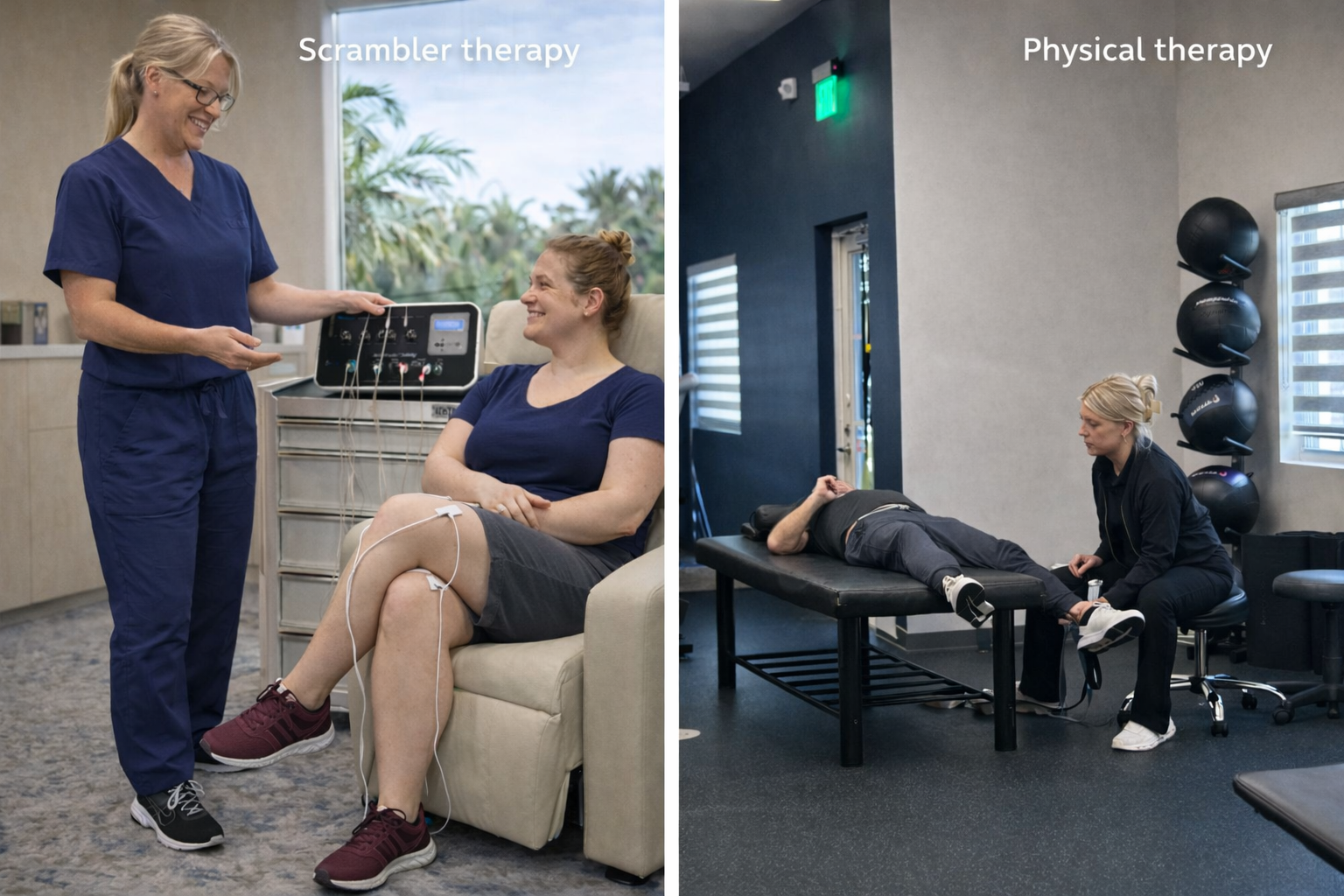
Chronic pain creates uncertainty. You want relief, function, and clear guidance. Physical therapy and Scrambler Therapy address pain through different biological mechanisms. Understanding these mechanisms helps you choose the right starting point or combination.
Physical therapy restores movement, strength, and function.
It treats pain by improving biomechanics and tissue capacity.
Physical therapy works best when pain relates to:
Licensed physical therapists assess posture, range of motion, and movement patterns. Treatment includes:
Clinical evidence shows physical therapy improves function and reduces disability in musculoskeletal pain conditions such as low back pain and knee osteoarthritis.
Next, you will read about a therapy that targets pain signaling instead of movement.
Scrambler Therapy treats neuropathic pain by modifying nerve signals.
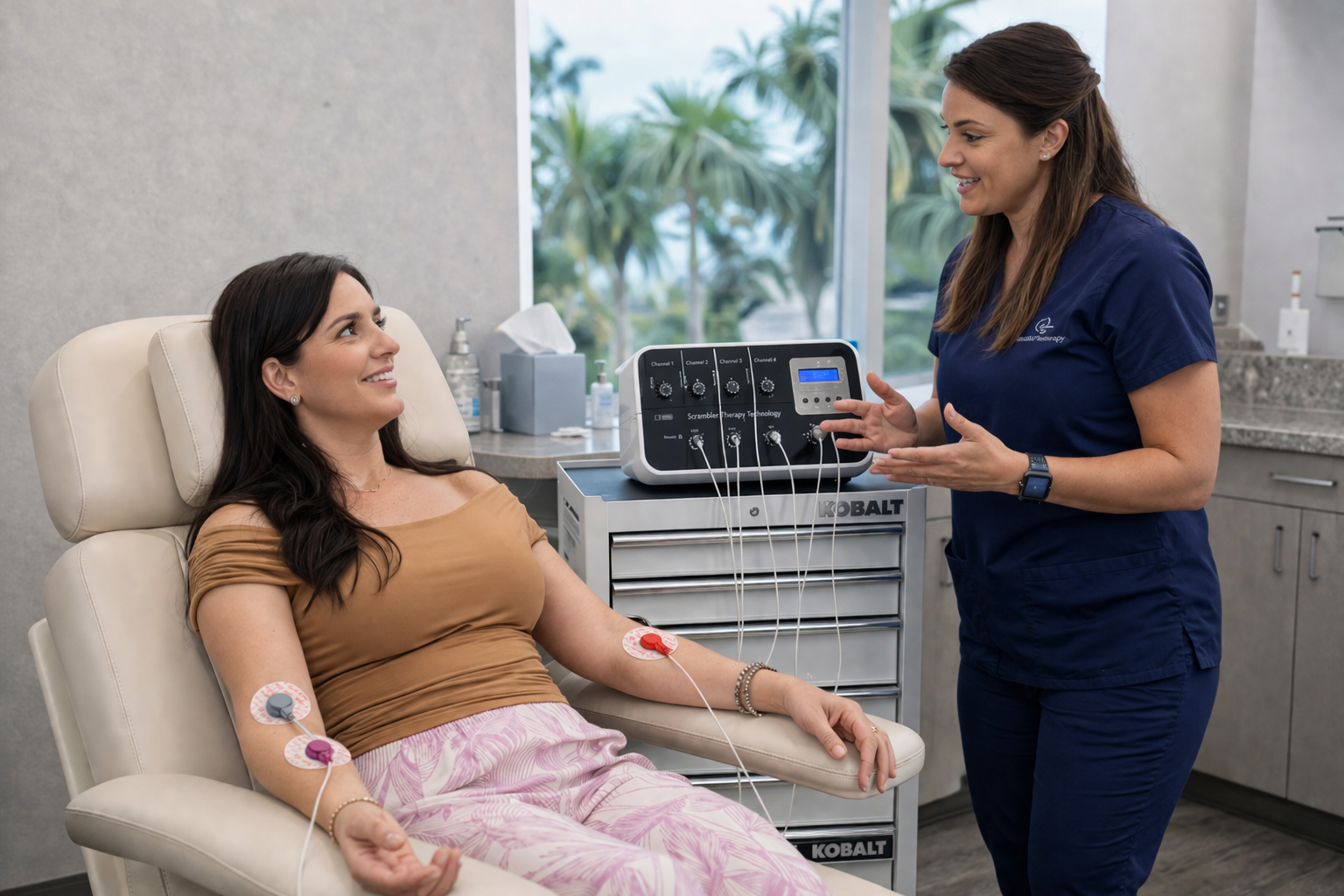
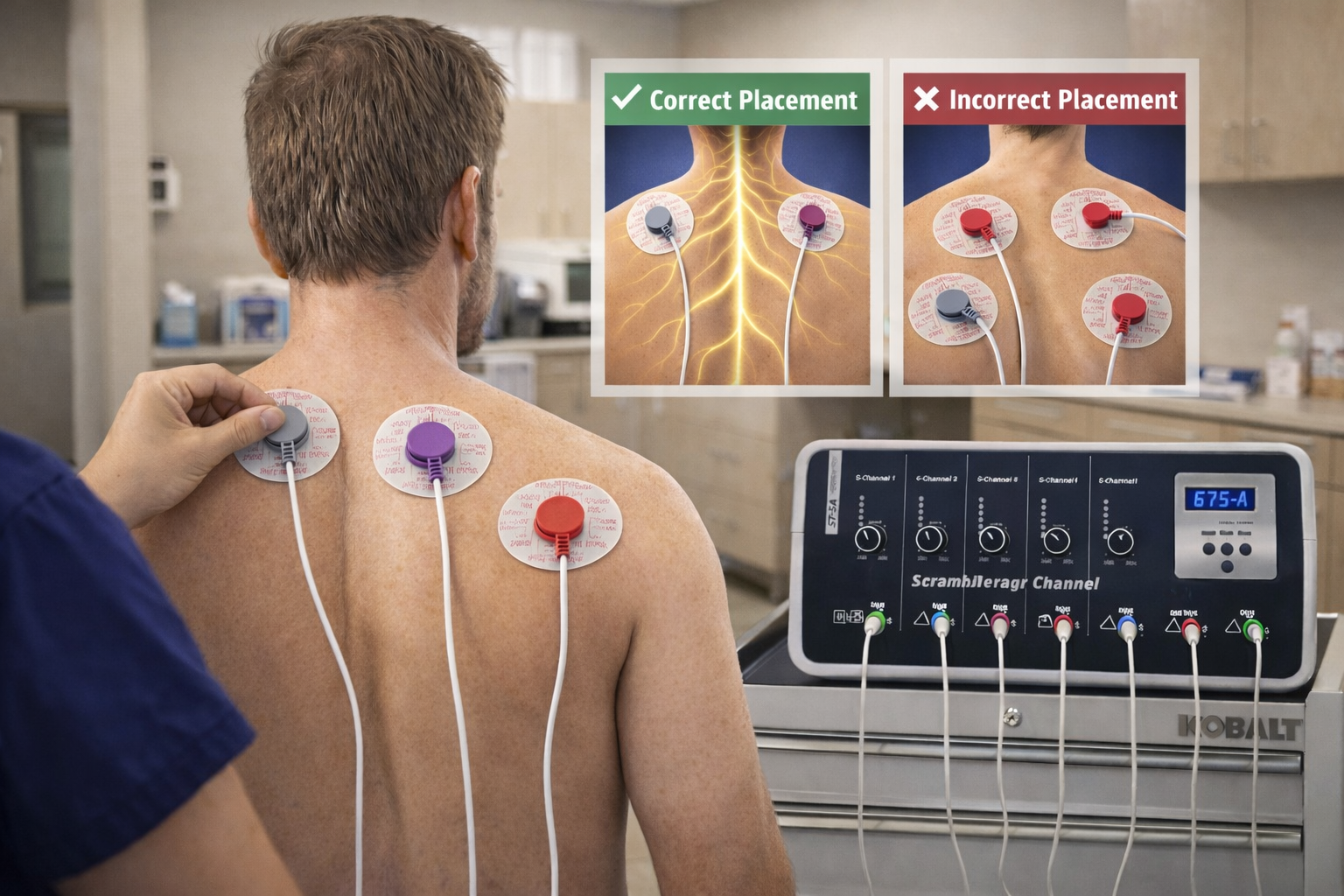
It uses surface electrodes to deliver non painful electrical information to the nervous system.
Scrambler Therapy targets conditions involving abnormal nerve signaling, including:
The therapy aims to replace pain signals with normal sensory input. Sessions are passive and typically last 30 to 45 minutes.
Next, you will see how both treatments differ across key clinical dimensions.
Next, you will learn how clinicians often combine both approaches.
Yes. Combined use often improves outcomes.
Reducing nerve pain can allow better participation in physical therapy.
Common sequencing strategies include:
This approach aligns with multidisciplinary pain management models supported by pain medicine guidelines.
Next, you will see real world clinical observations.
Patients who fail a single approach often improve with sequencing.
Pain relief alone does not restore function. Function alone may not resolve nerve pain.
Observed patterns include:
Patient feedback, pending verification, reflects this pattern:
Next, you will find concise answers to common patient questions.
No. Each therapy treats a different pain mechanism.
Neuropathic pain often responds better to neuromodulation.
Yes. Many patients follow a combined plan.
Yes. Neither requires injections or surgery.
A trained clinician evaluates pain type, function, and history.
This content is educational only. Individual results vary. Always consult a licensed healthcare professional for diagnosis and treatment planning.
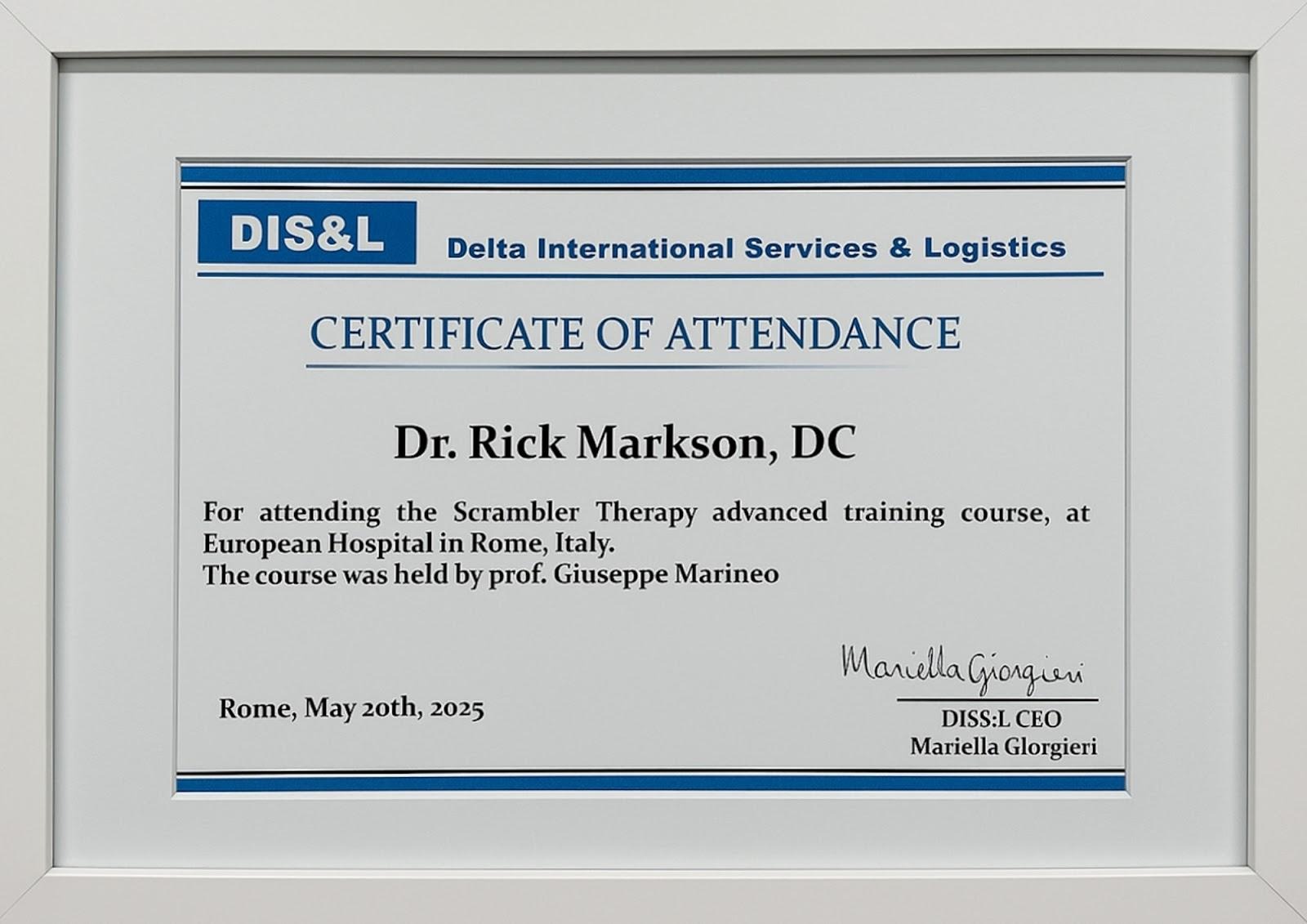
Discover South Florida Scrambler Therapy is one of the nation’s leading clinics for noninvasive chronic pain relief, offering FDA-cleared Scrambler Therapy® for adults and children. Co-founded by Dr. Rick Markson, one of the few practitioners worldwide to receive advanced certification directly from the therapy’s inventor in Rome, our clinic delivers globally recognized expertise with compassionate, personalized care. If you or a loved one is living with treatment-resistant nerve pain, we invite you to schedule a consultation and explore a life beyond pain.
Scrambler Therapy FDA FDA 510(k) database
Scrambler Therapy delivers 80%–90% pain reduction for patients suffering from nerve-related pain.
Pain Physician Journal study on Scrambler Therapy’s effectiveness
Scrambler therapy is a non-invasive, opioid-sparing treatment for chronic pain.
📘 What is scrambler therapy?
📘 What to Expect During a Scrambler Session
📘 CRPS Pain Relief Without Drugs—Real Patient Stories
📘 Conditions that scrambler therapy can treat
Keep up to date with important news about our clinic and your medical records.



.svg)
.svg)
.svg)