Why Electrode Placement Is Critical to Scrambler Therapy Success

FAQs

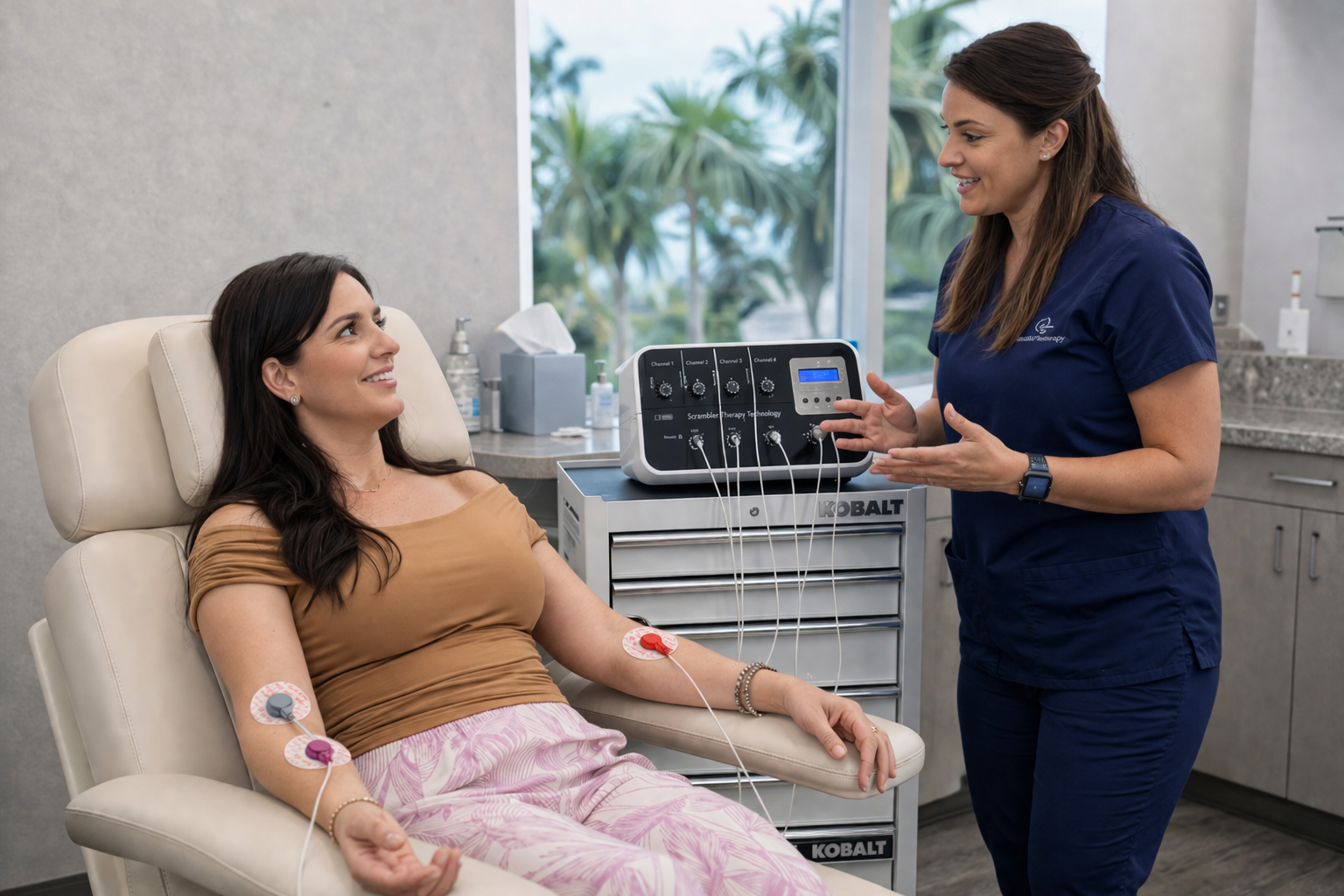
Scrambler Therapy is a non-invasive neuro-modulation treatment for chronic pain. It works by replacing pain signals with synthetic "non-pain" signals using electrical stimulation on the skin’s surface.

Unlike TENS (Transcutaneous Electrical Nerve Stimulation), which blocks pain signals temporarily, Scrambler Therapy reprograms the way the nervous system interprets pain. While spinal cord stimulation targets the spinal column directly, Scrambler Therapy interfaces with peripheral nerves and dermatomes, making it safer and FDA-cleared for a wider range of chronic pain conditions.

Key Features of Scrambler Therapy

Attribute Description
Modality Non-invasive electrical pain therapy
Target Neuropathic pain, including failed back surgery syndrome, post-chemo pain
Mechanism Pain signal replacement via external electrical stimulation
Frequency Typically 10–12 sessions per treatment cycle
Clinical Use Often used when opioids or other therapies fail

Scrambler Therapy achieves pain relief by delivering electrical pulses that mimic normal nerve impulses. These pulses "scramble" the pain signals sent to the brain, leading to a phenomenon known as pain reprogramming.

The next section explains why correct electrode placement is central to this mechanism.

Why Electrode Placement Determines Scrambler Therapy Success

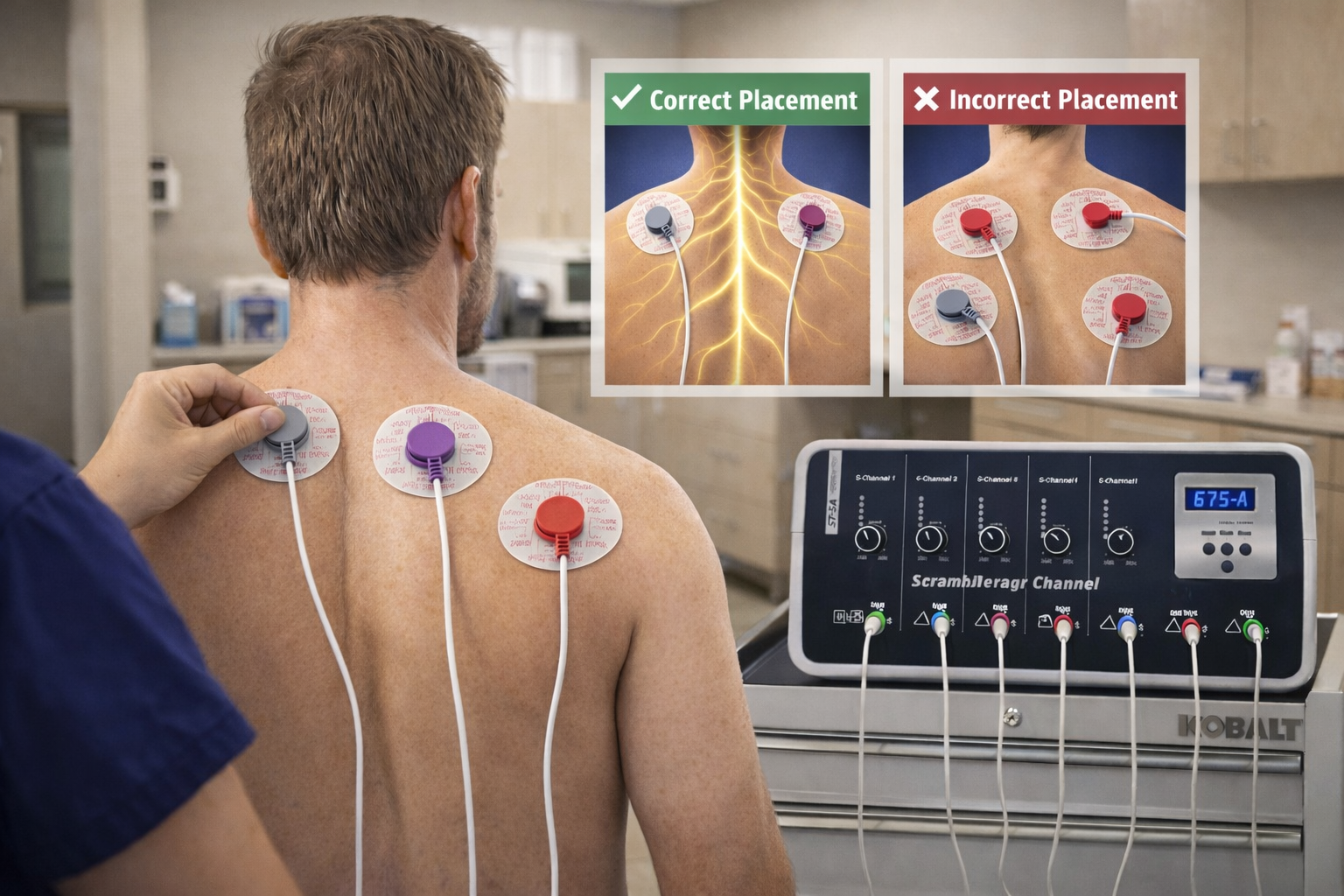
Electrode placement determines the fidelity and accuracy of signal transmission. If electrodes aren't placed near the correct dermatomes or along relevant nerve paths, the artificial "non-pain" signals won’t effectively replace the pain input.

Key Factors That Make Placement Critical

  • Signal Modulation: Proper electrode positioning ensures effective modulation of pain signals.
  • Treatment Accuracy: Misaligned electrodes can lead to non-therapeutic stimulation.
  • Individual Variability: Pain locations and nerve structures vary by patient, so placement must be customized.

Success with Scrambler Therapy heavily depends on treatment fidelity. A misaligned electrode disrupts communication between peripheral nerves and the CNS, reducing therapeutic response.

Next, we’ll look into the science behind this nerve-pain connection and why exact positioning affects outcomes.

How Electrode Placement Reprograms Pain Signals

Pain signal reprogramming depends on accurate targeting of affected nerve pathways. Electrode zones must align with the dermatomes corresponding to the patient’s pain area.

What Happens When Placement Is Accurate?

  • Afferent signals are redirected from nociceptors to the CNS.
  • Peripheral nerves receive synthetic non-pain signals, modulating their output.
  • Neuroplasticity is activated, helping retrain the brain’s pain interpretation system.

What Happens When Placement Is Off?

  • Pain persists due to signal bypass or nerve mismatch.
  • Signal interference fails to reach target areas.
  • Neuroplastic response is weakened, leading to inconsistent therapeutic outcomes.

Example: A patient with lower back pain might require electrode mapping across L3 to S1 dermatomes. Placing electrodes just 5 cm off-target may cause no therapeutic effect, despite correct machine settings.

Summary Table: Electrode Zones vs Pain Relief Outcomes

Electrode Placement Signal Reach Expected Relief
Correct (dermatome-specific) High Significant (up to 80% reduction)
Slightly off (nearby dermatomes) Moderate Partial (30–50% reduction)
Incorrect (non-related areas) Low Minimal or no relief

Up next: how clinicians ensure accuracy using evidence-based electrode mapping protocols.

Clinical Guidelines for Effective Electrode Placement

Clinicians use structured protocols to ensure accurate electrode alignment. The training involves anatomical mapping, patient-reported symptoms, and real-time feedback during therapy.

Key Steps in Clinical Placement Protocols

  1. Assessment of Pain Location
    • Using pain diaries and body charts

  2. Mapping to Dermatome Charts
    • Identifying the exact nerve roots involved

  3. Surface Landmark Identification
    • Bony landmarks and muscle lines guide pad placement

  4. Real-Time Feedback from Patient
    • Adjustments are made during therapy sessions

  5. Documentation for Consistency
    • Ensures repeatable electrode positioning in follow-ups

Clinician-Guided Placement vs Non-Trained Application

Variable Trained Clinician Untrained User
Accuracy High Low
Feedback integration Active Minimal
Result Consistency Reliable Inconsistent
Risk of Misplacement Low High

Clinician-guided Scrambler Therapy increases treatment success rates by up to 75%, according to studies on therapy protocol adherence.

In the next section, we’ll explore what goes wrong when electrode placement is incorrect.

Common Electrode Placement Mistakes and Their Effects

Misplaced electrodes are the most common reason Scrambler Therapy doesn’t work.

Typical Electrode Placement Errors

  • Wrong Dermatome Targeting: Placing electrodes outside of affected dermatomes
  • Poor Pad Adhesion: Leading to signal loss or inconsistent stimulation
  • Excessive Distance Between Pads: Weakens signal strength
  • Ignoring Pain Migration: Not adjusting placement as pain shifts

Negative Effects of Electrode Misplacement

  • Non-therapeutic stimulation causing poor outcomes
  • Patient frustration due to lack of relief
  • Increased number of sessions with limited effectiveness
  • Unnecessary discontinuation of potentially effective therapy

A study in Pain Physician Journal found that incorrect electrode positioning accounted for 30–40% of therapy failures in Scrambler Therapy patients.

In the next part, we’ll cover how personalized placement dramatically improves results.

How Personalized Electrode Placement Enhances Outcomes

Personalization turns a standard Scrambler Therapy session into a patient-specific neural reprogramming treatment.

How Customization Works

  • Patient History Evaluation: Includes past surgeries, pain locations, nerve involvement
  • Session-by-Session Adjustment: Placement may evolve across multiple sessions
  • Dynamic Mapping: Real-time pad reallocation based on feedback
  • Patient-Clinician Communication: Drives adaptive response tuning

Benefits of Personalized Placement

  • Higher efficacy due to matching electrode zones with individual nerve pathways
  • Improved patient satisfaction from interactive, responsive care
  • Reduced treatment duration by reaching therapeutic thresholds faster
  • Enhanced neuroplastic response, leading to longer-term relief

Example: Patients reporting pain relief during stimulation often undergo electrode tuning mid-session to refine the signal delivery. This is known as iterative mapping.

Adaptive Scrambler Therapy is especially useful for complex pain cases involving mixed nerve origins, such as diabetic neuropathy or chemotherapy-induced peripheral neuropathy.

Let’s now address the most common questions patients ask about electrode placement.

FAQs – Electrode Placement in Scrambler Therapy

How does electrode placement affect Scrambler Therapy results?

Correct electrode placement ensures that the pain-modulating signals reach the right nerves. Without it, signal replacement cannot occur, making therapy ineffective.

Can incorrect placement make Scrambler Therapy ineffective?

Yes. Misplacement leads to non-therapeutic zones being stimulated, resulting in poor or no pain relief. This often causes therapy dropout or mislabeling the treatment as unsuccessful.

Is electrode positioning the same for every patient?

No. Each patient has unique nerve pathways and pain zones. Placement must be customized based on individual pain mapping, symptoms, and physical anatomy.

How do clinicians decide where to place electrodes?

Clinicians use dermatome charts, patient feedback, physical assessment, and stimulation response tests to determine the most effective electrode zones.

Can electrode placement be changed during therapy?

Yes. Electrode location can be adjusted during sessions based on patient responses. This dynamic repositioning improves outcomes through real-time optimization.
Summary of Key Takeaways

Core Concept Importance
Electrode placement Determines therapy success
Accuracy Ensures pain signal reprogramming
Customization Boosts therapeutic outcomes
Clinician involvement Critical for optimal electrode alignment
Common mistakes Can severely limit effectiveness

Experiencing Chronic Pain in South Florida?

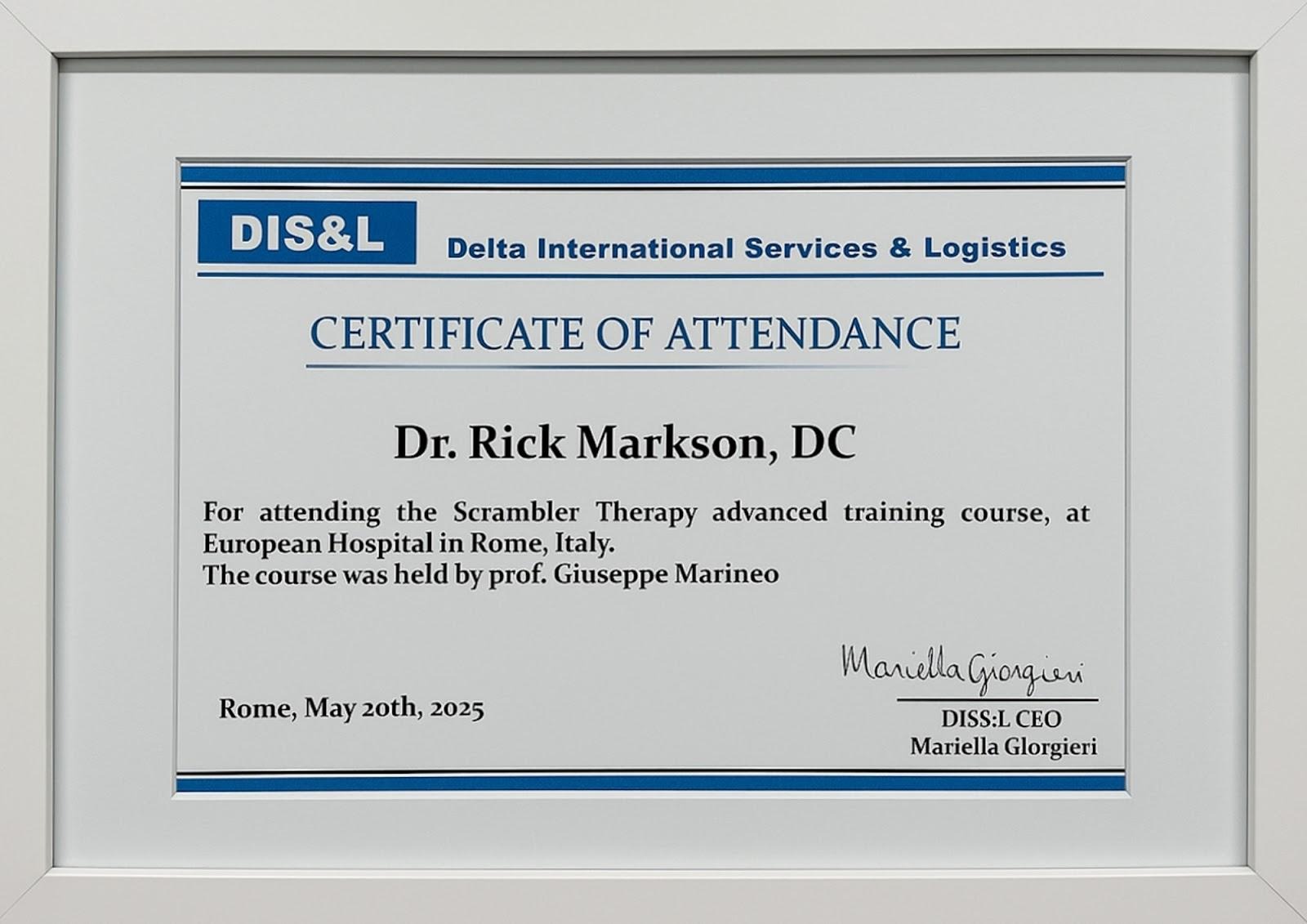
Discover South Florida Scrambler Therapy is one of the nation’s leading clinics for noninvasive chronic pain relief, offering FDA-cleared Scrambler Therapy® for adults and children. Co-founded by Dr. Rick Markson, one of the few practitioners worldwide to receive advanced certification directly from the therapy’s inventor in Rome, our clinic delivers globally recognized expertise with compassionate, personalized care. If you or a loved one is living with treatment-resistant nerve pain, we invite you to schedule a consultation and explore a life beyond pain.

Recommended Reads:

📘 What is scrambler therapy?
📘 What to Expect During a Scrambler Session
📘 CRPS Pain Relief Without Drugs—Real Patient Stories
📘 Conditions that scrambler therapy can treat

Take the Next Step: Free Consultation at South Florida Scrambler

Every day counts when we suffer from chronic pain. South Florida Scrambler Therapy offers a free initial consultation to determine if Scrambler is right for you. Schedule Today:

  • Speak directly with Dr. Rick Markson’s team
  • Learn about treatment protocols and insurance
  • Complete a customized treatment plan
  • Start seeing results within days, not months

📞 Call Now or Visit website: www.southfloridascramblertherapy.com

📍 We serve Palm Beach, Fort Lauderdale, and Miami from our location at 100 NW 100th Ave, Plantation

You Can Follow Us through Our Social Media:

📸InstagramDay-in-the-life stories from our patients
👍FacebookSuccess journeys and community support

You deserve to laugh, and enjoy life without pain. The journey starts here

Testimonials

Patient Reviews

"I am so thankful for the relief I found through Scrambler Therapy. After years of chronic pain from neuropathy, I finally have my life back. The team truly cares about their patients."
Melissa Chen
2 weeks ago
"I am so thankful for the relief I found through Scrambler Therapy. After years of chronic pain from neuropathy, I finally have my life back. The team truly cares about their patients."
Melissa Chen
2 weeks ago
"I am so thankful for the relief I found through Scrambler Therapy. After years of chronic pain from neuropathy, I finally have my life back. The team truly cares about their patients."
Melissa Chen
2 weeks ago
"I am so thankful for the relief I found through Scrambler Therapy. After years of chronic pain from neuropathy, I finally have my life back. The team truly cares about their patients."
Melissa Chen
2 weeks ago
"I am so thankful for the relief I found through Scrambler Therapy. After years of chronic pain from neuropathy, I finally have my life back. The team truly cares about their patients."
Melissa Chen
2 weeks ago
"I am so thankful for the relief I found through Scrambler Therapy. After years of chronic pain from neuropathy, I finally have my life back. The team truly cares about their patients."
Melissa Chen
2 weeks ago
Trusted Relief in South Florida Scrambler Therapy

Start Your Nerve Pain-Free Journey Today

Don't let nerve pain discomfort control your life. Call today or book online to see if this is right for you.
natural treatment for nerve pain