Caregiver CRPS Support: A Family’s Journey Toward Functional Recovery

Health & Pain Management Tips

When CRPS Changes Everything

When a loved one develops Complex Regional Pain Syndrome (CRPS), daily life shifts overnight. Tasks once taken for granted, buttoning a shirt, walking across a room, sleeping through the night, can suddenly become overwhelming.

For caregivers, the burden is both physical and emotional. Appointments multiply. Pain flares disrupt routines. Roles within the household change.

One caregiver described it this way:

“The hardest part wasn’t the pain itself, it was watching someone I love feel trapped inside their own body.”

Caregiver CRPS support requires more than resilience. It requires understanding the condition, protecting your mental health, and exploring structured, evidence-informed treatment pathways.

Understanding CRPS and the Nervous System

Complex Regional Pain Syndrome (CRPS) is a chronic neuropathic pain condition involving dysfunction in the peripheral and central nervous systems.¹²

CRPS is classified as:

  • Type I: No confirmed nerve injury
  • Type II: Associated with identifiable nerve damage

Symptoms may include:

  • Hyperalgesia (increased pain sensitivity)⁴
  • Allodynia (pain from light touch)⁴
  • Temperature or skin color changes
  • Swelling
  • Abnormal hair or nail growth
  • Decreased mobility

CRPS is often associated with central sensitization, a process in which the nervous system becomes hypersensitive and amplifies pain signaling.³

Practical Caregiver Support: A Structured Approach

Supporting a loved one with CRPS requires organization, realistic expectations, and sustainable emotional support. A structured caregiving plan can reduce caregiver burnout and improve long-term outcomes.

Below are key tools to help caregivers navigate chronic pain more effectively.

Recognizing Caregiver Burnout

Chronic pain caregiving can lead to emotional exhaustion and compassion fatigue. Warning signs may include:

  • Irritability or withdrawal
  • Sleep disruption
  • Chronic stress or tension
  • Feeling overwhelmed or resentful

Protecting your own mental health is essential to maintaining a stable support system.

Managing CRPS Flare-Ups

CRPS symptoms can fluctuate unpredictably. During a flare-up:

  • Reduce environmental triggers
  • Use pacing strategies to prevent overexertion
  • Encourage gentle movement if tolerated
  • Document pain intensity, duration, and triggers

Tracking symptom variability helps guide long-term management decisions.

Preparing for Pain Specialist Appointments

Bring:

  • A clear symptom timeline
  • Medication history and responses
  • Previous imaging or procedures
  • Measurable functional goals (e.g., walking tolerance, dexterity, sleep quality)

Focusing on functional restoration, not just pain scores, supports a more individualized treatment strategy.

Asking the Right Questions

Caregivers can support shared decision-making by asking:

  • Is this early or chronic-phase CRPS?
  • What are realistic treatment expectations?
  • How will progress be measured?
  • How does this fit into a multidisciplinary care plan?

Understanding risk-benefit considerations improves clarity and reduces uncertainty.

Daily Symptom Tracking

Tracking pain intensity, mobility tolerance, sleep quality, and activity triggers provides valuable data for your care team and supports structured long-term management.

While caregiver strategies provide stability at home, medical treatment remains a central component of long-term CRPS management.

Multimodal CRPS Treatment Approaches

CRPS is a complex neuroinflammatory and neuropathic pain condition that rarely responds to a single intervention alone.

Clinical guidelines recommend a multimodal approach, which may include:⁸

  • Physical therapy to preserve mobility and prevent contractures
  • Graded motor imagery and desensitization techniques
  • Pharmacologic management for neuropathic pain
  • Psychological support to address chronic illness stress
  • Neuromodulation therapies when appropriate

The goal is not simply pain suppression, but functional restoration and nervous system regulation.

Within this framework, non-invasive neuromodulation options such as Scrambler Therapy may be considered when pain intensity limits rehabilitation progress.

Scrambler Therapy: A Non-Invasive Neuromodulation Option

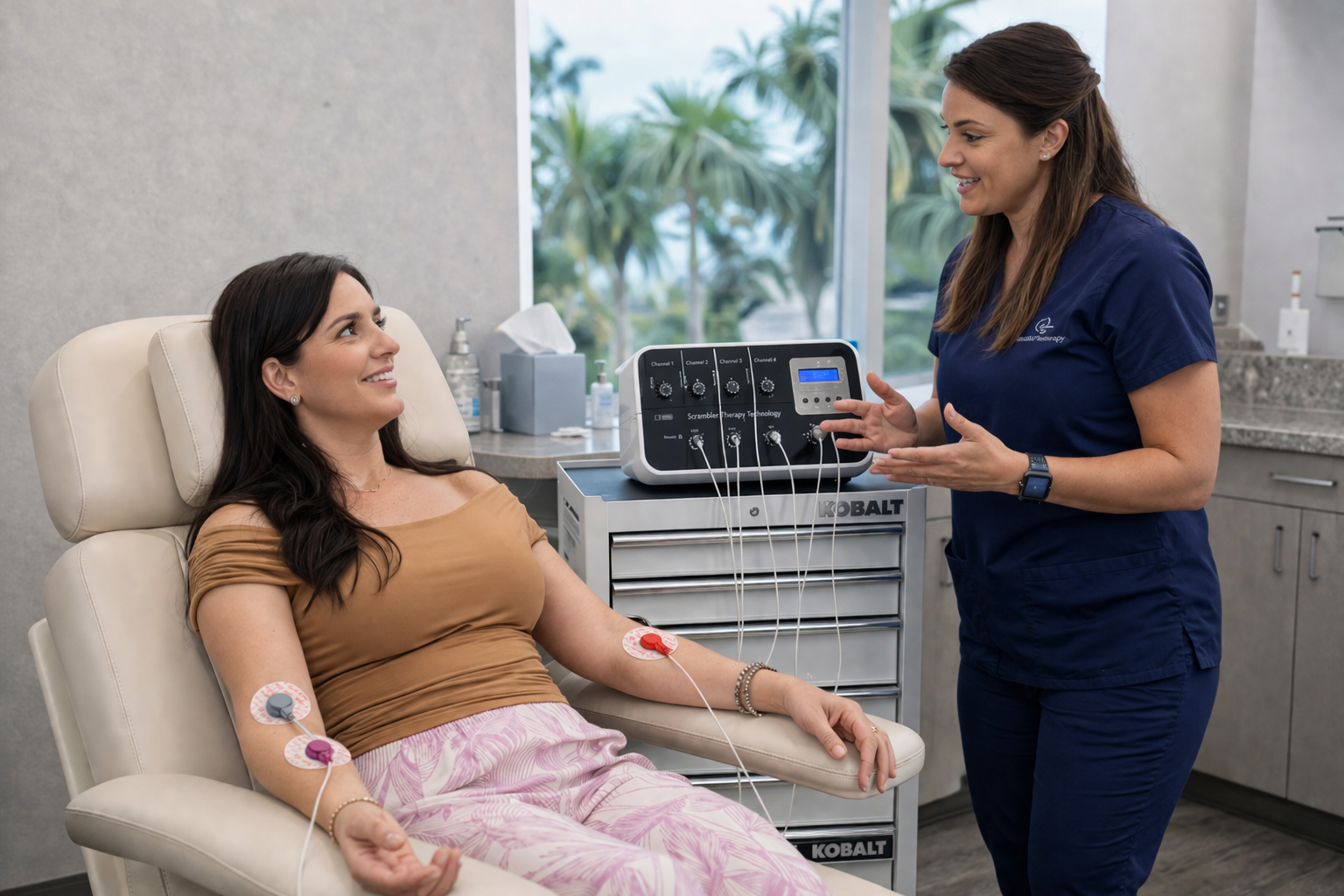
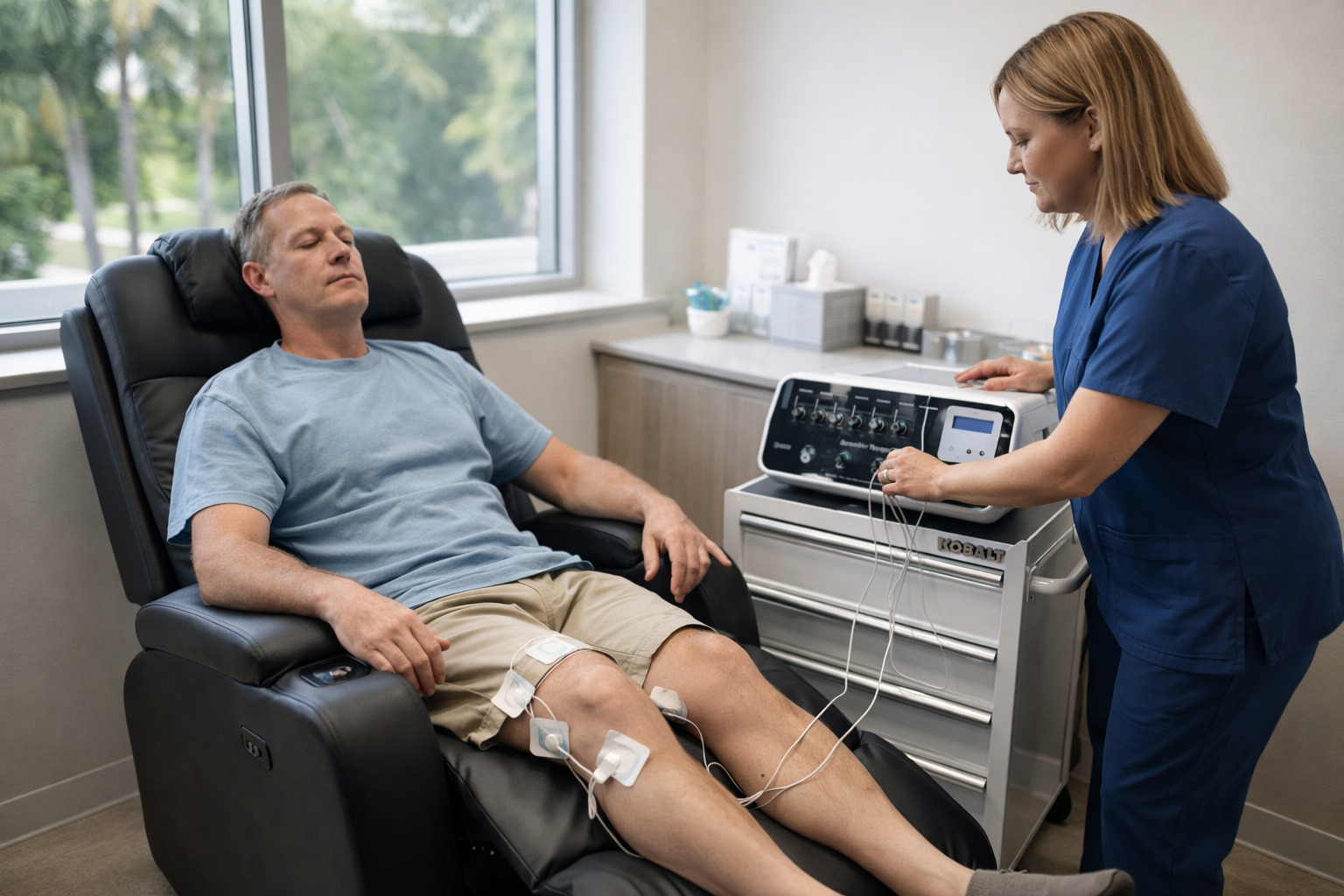
Scrambler Therapy is an FDA approved therapy therapy used for neuropathic pain.

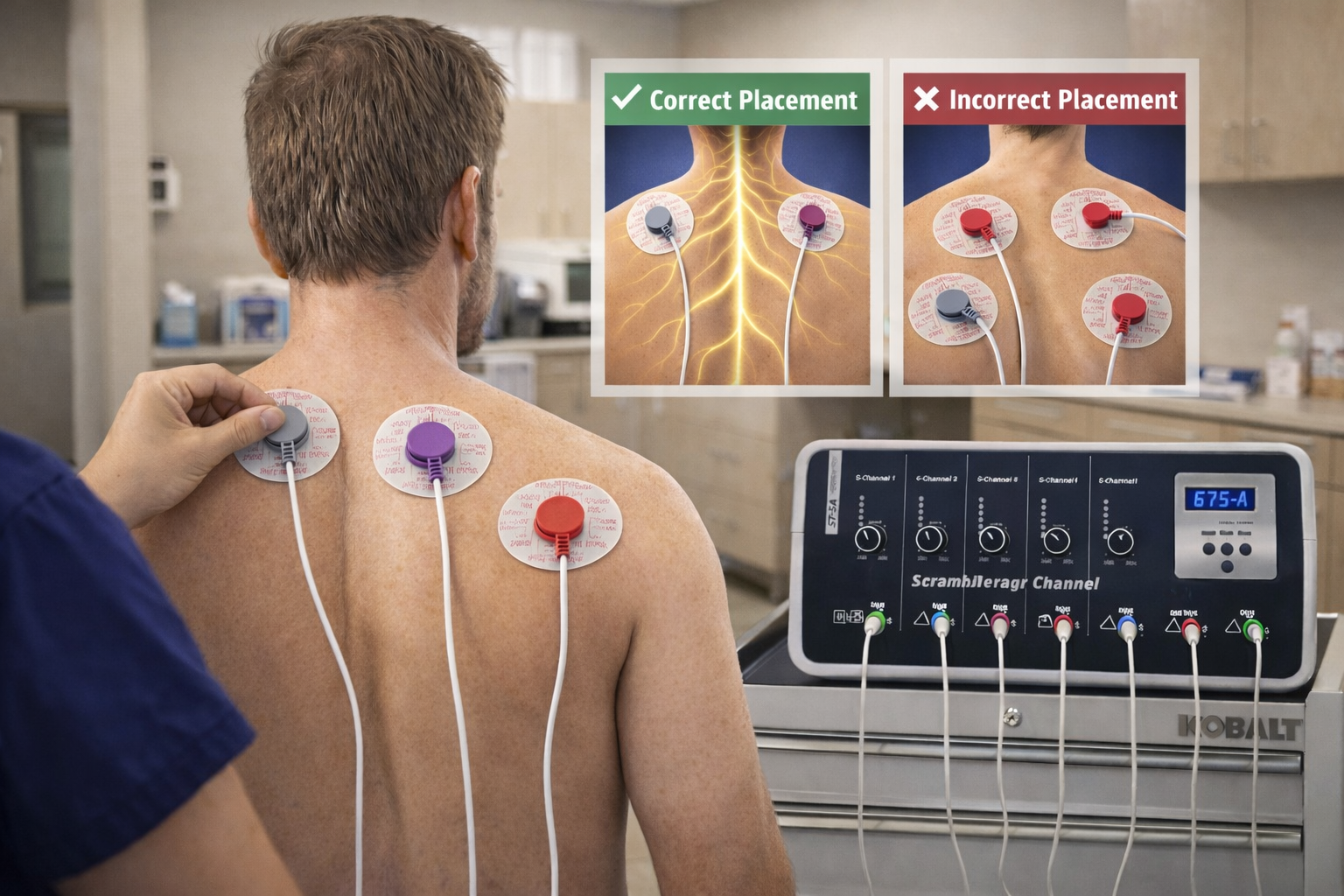
It is designed to deliver controlled electrical stimulation through surface electrodes placed near, but not directly on, the painful area.

Proposed Mechanism

Research suggests Scrambler Therapy may:

  • Provide synthetic “non-pain” signals
  • Interfere with maladaptive C-fiber pain transmission
  • Support neuroplastic changes in central pain processing

While the exact mechanism continues to be studied, clinical trials have demonstrated meaningful pain reduction in selected neuropathic pain populations.⁶⁷

What Patients Experience

  • Typically delivered over 10 sessions
  • Non-invasive
  • Generally well tolerated
  • No systemic medication side effects

Important Considerations and Limitations

While Scrambler Therapy has shown promising results in selected neuropathic pain populations, several important considerations should be kept in mind:

  • Outcomes vary by individual. Duration of symptoms, underlying health status, and adherence to rehabilitation all influence results.
  • Early-stage CRPS may respond more favorably than long-standing, chronic cases.
  • It is not considered first-line therapy for all patients and is typically integrated into a broader, multidisciplinary treatment plan.
  • Contraindications may apply, including certain implanted electrical devices or active infection near electrode placement sites.
  • Long-term durability continues to be studied, and some patients may require repeat treatment courses.

A comprehensive consultation is necessary to determine whether neuromodulation is appropriate for a specific clinical situation.

Evidence and Clinical Perspective

Peer-reviewed studies have examined Scrambler Therapy in neuropathic pain conditions, including CRPS and chemotherapy-induced neuropathy, showing clinically meaningful reductions in pain intensity for some patients.

However:

  • Long-term durability is still under investigation
  • Optimal patient selection criteria continue to be studied

Balanced, evidence-informed discussions improve treatment decisions.

Functional Recovery: Beyond Pain Scores

Pain reduction alone is not the ultimate goal.

True recovery focuses on restoring:

  • Walking tolerance
  • Hand dexterity
  • Sleep quality
  • Endurance
  • Independence in daily tasks

One patient reported that after therapy, she was able to cook independently again.

For her spouse, that milestone meant:

“I wasn’t doing everything alone anymore.”

Functional gains reduce caregiver burden significantly.

When to Consider Neuromodulation Options

You may explore Scrambler Therapy if:

  • Pain persists despite conservative care
  • Medication side effects limit treatment
  • Invasive procedures have been discussed and you are exploring conservative options within a comprehensive care plan
  • Rehabilitation progress has plateaued

Frequently Asked Questions

Is Scrambler Therapy FDA approved?

It is FDA-cleared as a medical device for neuropathic pain treatment.

Is it painful?

Most patients describe the sensation as tingling or mild stimulation.

How long do results last?

Durability varies. Some patients report sustained relief, while others may require repeat sessions.

Does it replace physical therapy?

No. It is often used to enhance participation in rehabilitation.

📚 Reference List (AMA Format)

  1. National Institute of Neurological Disorders and Stroke (NINDS). Complex Regional Pain Syndrome (CRPS) Information Page. National Institutes of Health.
  2. International Association for the Study of Pain (IASP). Complex Regional Pain Syndrome Fact Sheet. IASP; 2022.
  3. Woolf CJ. Central sensitization: Implications for the diagnosis and treatment of pain. Pain. 2011;152(3 Suppl):S2-S15.
  4. International Association for the Study of Pain (IASP). IASP Terminology: Hyperalgesia and Allodynia. IASP; 2020.
  5. U.S. Food and Drug Administration. 510(k) Premarket Notification Database: Scrambler Therapy (Calmare®) Device Clearance. FDA; Accessed 2026.
  6. Marineo G, et al. Scrambler therapy may relieve chronic neuropathic pain: Results of clinical trials. Neuromodulation. 2012;15(1):23-30.
  7. Smith TJ, et al. Randomized controlled trial of Scrambler therapy for chemotherapy-induced peripheral neuropathy. J Clin Oncol. 2013;31(10):1240-1247.
  8. Deer TR, et al. Comprehensive consensus guidelines for chronic pain management: Multimodal and interdisciplinary approaches. Pain Physician. 2021;24(S1):S1-S127.
  9. Bruehl S. Complex regional pain syndrome. BMJ. 2015;351:h2730

Disclaimer:

This article is for educational purposes only and does not replace individualized medical advice. Treatment decisions should be made in consultation with a qualified healthcare professional.

A Structured Next Step

Complex Regional Pain Syndrome requires thoughtful, multidisciplinary care. While outcomes vary, many patients benefit from structured treatment strategies that prioritize functional restoration and nervous system regulation.

For families exploring non-invasive neuromodulation options within a comprehensive pain management plan, South Florida Scrambler Therapy offers specialized evaluation for treatment-resistant neuropathic pain, including CRPS.

A consultation includes:

  • Review of your clinical history and prior treatments
  • Assessment of acute versus chronic phase considerations
  • Discussion of individualized, conservative treatment options
  • Determination of whether Scrambler Therapy may be appropriate within a broader rehabilitation strategy

Taking the next step begins with informed evaluation.

Schedule a structured consultation with South Florida Scrambler Therapy to determine whether neuromodulation may be appropriate within your comprehensive care plan.

Patient Reviews

"I am so thankful for the relief I found through Scrambler Therapy. After years of chronic pain from neuropathy, I finally have my life back. The team truly cares about their patients."
Melissa Chen
2 weeks ago
"I am so thankful for the relief I found through Scrambler Therapy. After years of chronic pain from neuropathy, I finally have my life back. The team truly cares about their patients."
Melissa Chen
2 weeks ago
"I am so thankful for the relief I found through Scrambler Therapy. After years of chronic pain from neuropathy, I finally have my life back. The team truly cares about their patients."
Melissa Chen
2 weeks ago
"I am so thankful for the relief I found through Scrambler Therapy. After years of chronic pain from neuropathy, I finally have my life back. The team truly cares about their patients."
Melissa Chen
2 weeks ago
"I am so thankful for the relief I found through Scrambler Therapy. After years of chronic pain from neuropathy, I finally have my life back. The team truly cares about their patients."
Melissa Chen
2 weeks ago
"I am so thankful for the relief I found through Scrambler Therapy. After years of chronic pain from neuropathy, I finally have my life back. The team truly cares about their patients."
Melissa Chen
2 weeks ago
Trusted Relief in South Florida Scrambler Therapy

Start Your Nerve Pain-Free Journey Today

Don't let nerve pain discomfort control your life. Call today or book online to see if this is right for you.
natural treatment for nerve pain