.webp)

If you live with chronic nerve pain, such as Chemotherapy-Induced Peripheral Neuropathy (CIPN), post-herpetic neuralgia, or early diabetic neuropathy, you understand how slow and frustrating recovery can feel.
Many patients ask:
Why do some people experience faster relief with Scrambler Therapy?
The answer lies in how this therapy interacts directly with the body’s nerve signaling system, rather than masking symptoms with medication or altering tissue surgically.
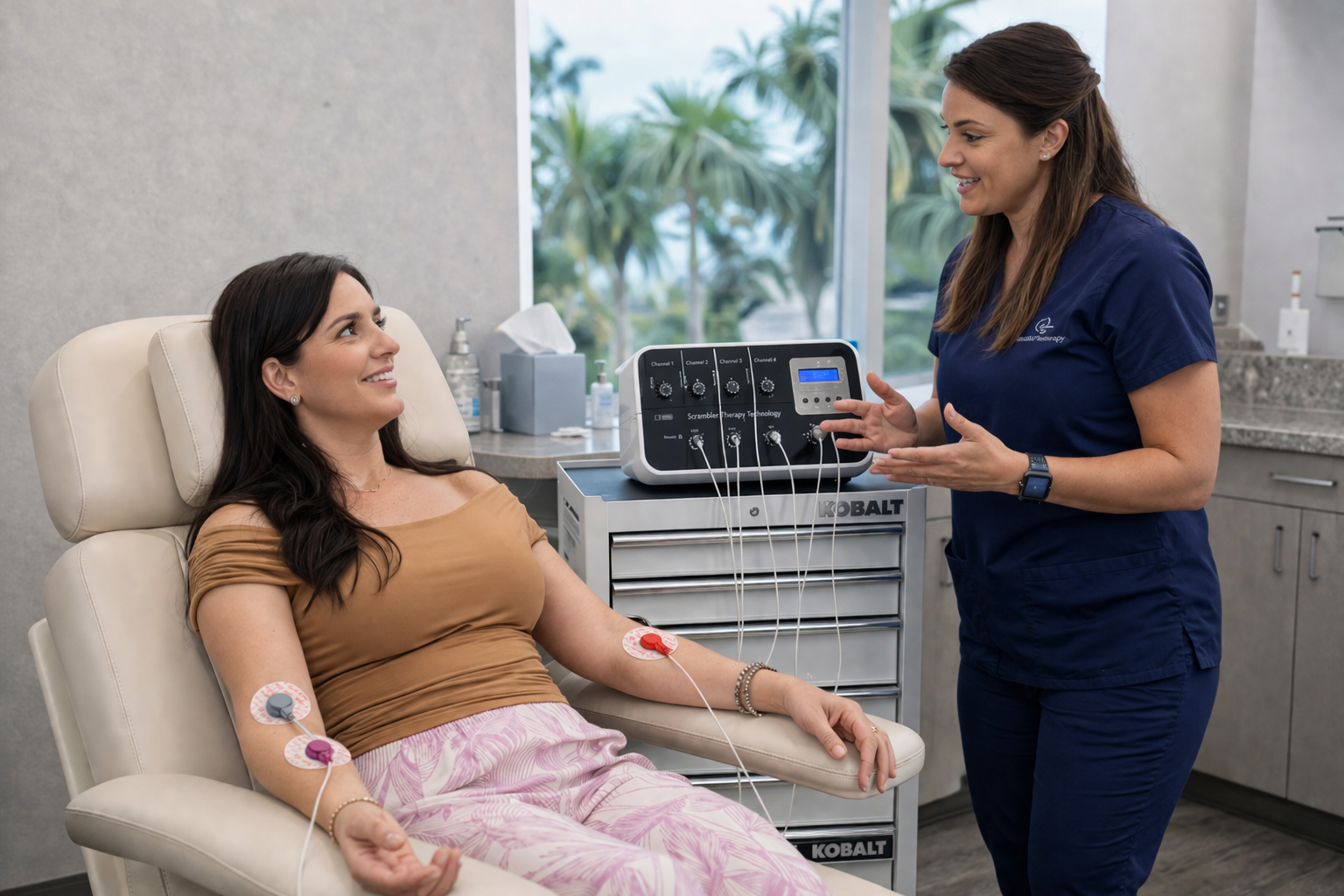
Scrambler Therapy (also known as Calmare Therapy) is an FDA-cleared, non-invasive treatment for chronic neuropathic pain. It uses surface electrodes placed on the skin to deliver low-level electrical signals designed to substitute “non-pain” information for faulty pain signals.
Unlike traditional TENS units that temporarily block pain perception, Scrambler Therapy is designed to retrain how the brain interprets pain signals.
Learn more about what to expect during a Scrambler session.
In many chronic pain conditions, the nervous system becomes overactive, a process known as central sensitization.¹
Even after an injury heals, the spinal cord and brain may continue transmitting amplified pain messages.
This creates a persistent loop:
Injury → Overactive nerve signaling → Ongoing pain perception
Chronic neuropathic pain often involves hypersensitive C-fibers and A-delta fibers transmitting exaggerated signals.
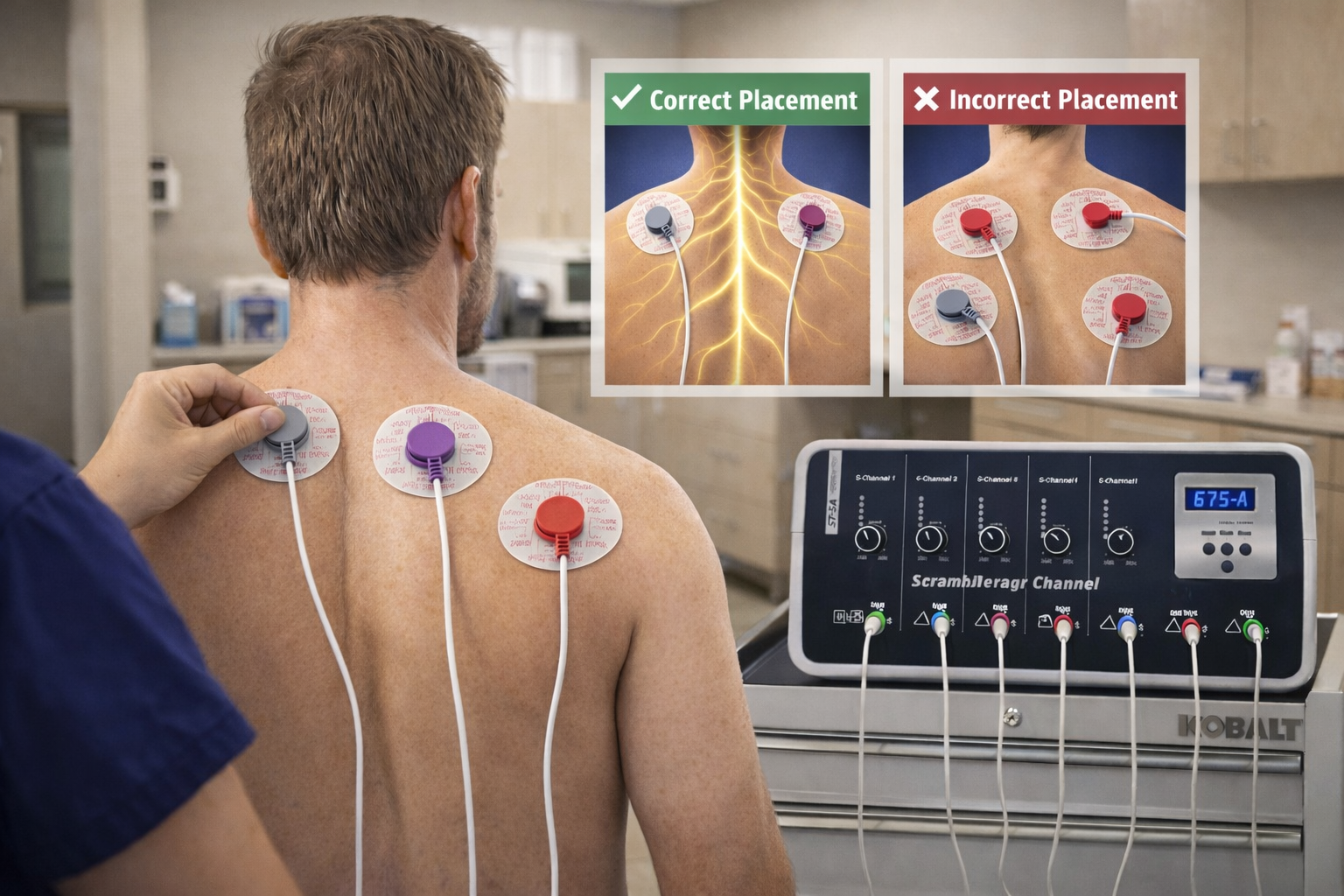
Scrambler Therapy delivers synthetic non-pain signals through the same peripheral nerves.³
The brain then receives alternative input, which may help disrupt the maladaptive pain loop.
Over repeated sessions, the brain may begin interpreting these pathways as non-painful.
This process leverages neuroplasticity, the brain’s ability to reorganize neural connections.
Neuroplasticity allows the nervous system to adapt quickly when presented with consistent new input.
Rather than waiting for:
Scrambler Therapy works at the level of electrical nerve signaling, which may explain why some patients report noticeable changes early in the treatment series.
Clinical studies have shown meaningful reductions in pain scores in select neuropathic populations.²
In clinical practice, some patients report noticeable improvement within the first few sessions, while others require a full treatment course to achieve sustained relief.
Response time varies based on individual clinical and neurological factors.
Patients with shorter pain duration and localized neuropathic pain may respond more quickly than those with longstanding or widespread pain syndromes.
While many patients experience meaningful relief, response times vary depending on individual clinical factors.
Some individuals may require a longer treatment course, including those with:
In these cases, neural pathways may be more deeply entrenched, requiring additional sessions or combination approaches. A personalized medical evaluation is essential to determine candidacy and realistic expectations.
Scrambler Therapy is non-invasive and does not require anesthesia.
Common side effects may include:
A full medical evaluation is required before beginning treatment.
TENS units temporarily block pain perception.
Scrambler Therapy uses proprietary algorithms designed to substitute non-pain signals through targeted nerve pathways in structured treatment sessions.
It is not a home-use device.
Multiple peer-reviewed studies have evaluated Scrambler Therapy in neuropathic pain conditions, including chemotherapy-induced peripheral neuropathy and post-herpetic neuralgia. In select trials, patients experienced statistically significant reductions in pain scores.²
Most protocols involve 10–12 sessions over consecutive days.
Most patients describe the sensation as mild tingling.
Duration varies. Some patients experience prolonged benefit; others may require booster sessions.
Keep up to date with important news about our clinic and your medical records.


.svg)
.svg)
.svg)