.webp)

Neuropathy is the term for nerve discomfort that results from injury or malfunction to the peripheral nerves.It often causes shooting, burning, or electric-like pain.
Doctors typically prescribe nerve pain relief medication to manage symptoms, not fix the source. These include:
Common neuropathies include:
The myelin sheath degrades or nerve endings misfire, creating chronic pain signals. Allodynia (pain from light touch) and hyperalgesia (amplified pain) are common.
Next, we’ll look at why long-term use of nerve pain pills comes with serious downsides.
Pills for nerve pain often fail to provide lasting relief and can create new problems.
Patients often switch between prescription nerve pain drugs due to non-responsiveness or side effect profiles.
These medications cover up the symptoms of chronic neuropathy without fixing the underlying nerve signaling problems.
Let’s explore an FDA-cleared solution that works by retraining the nervous system instead of numbing it.
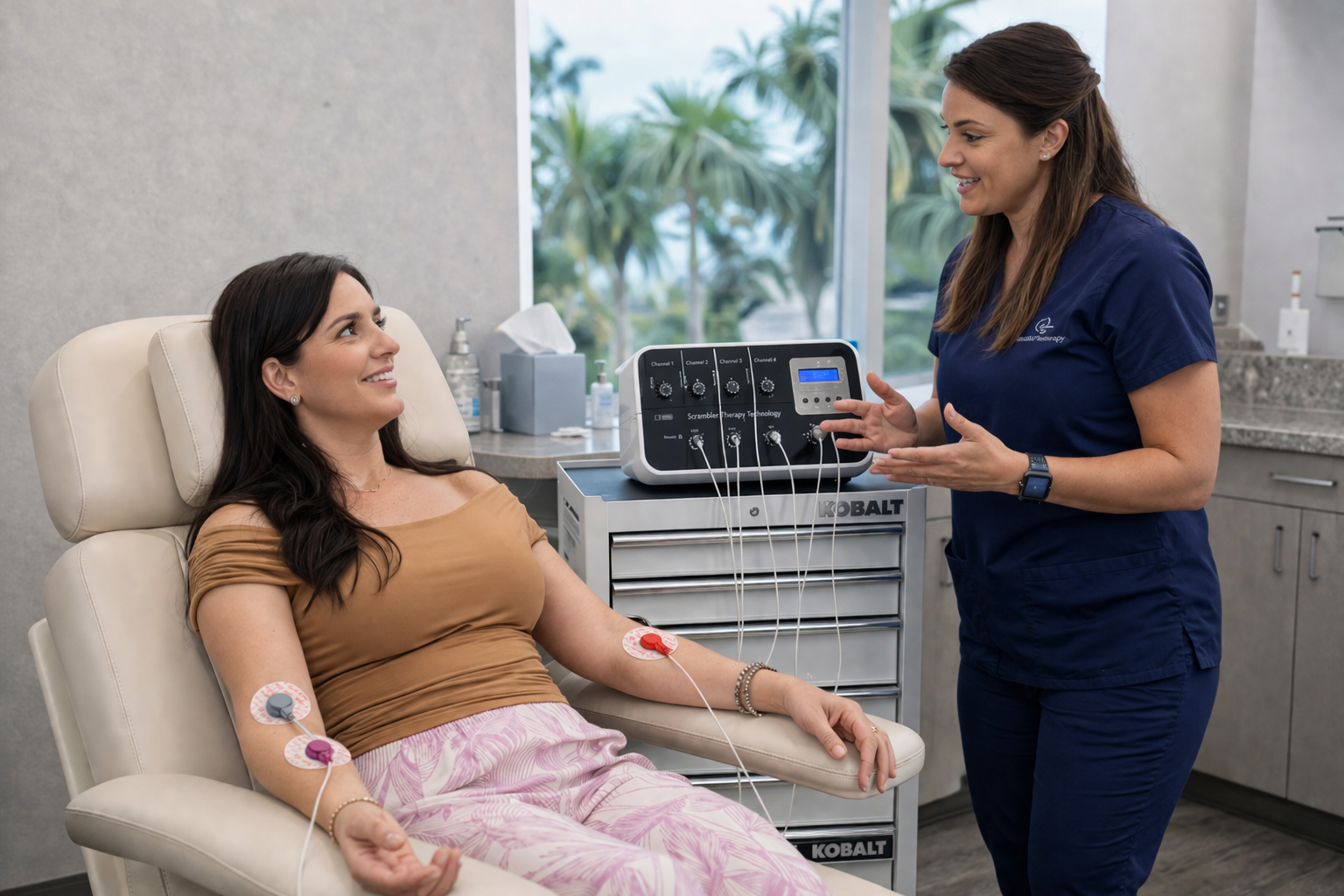
A non-invasive neuromodulation procedure called Scrambler Therapy retrains the way nerves transmit pain signals using the Calmare device.
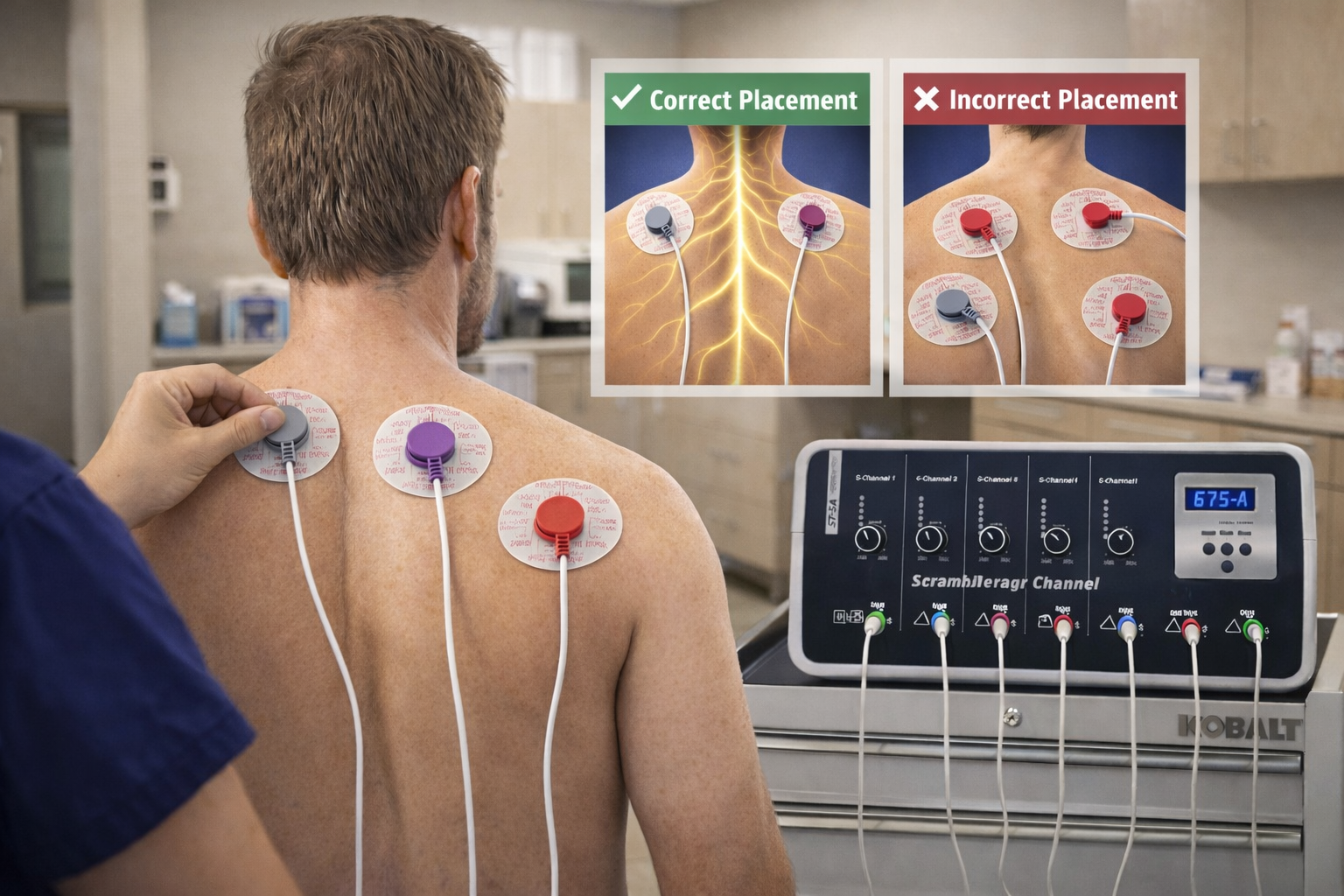
It works through bioelectrical stimulation. Surface electrodes are placed on skin areas near the pain site. The brain receives artificial "non-pain" signals from them, which confuse and obfuscate pain signals.
It differs from TENS units by using complex waveforms specifically designed to retrain the central nervous system, not just block pain.
Now, let’s compare how this therapy contrasts with traditional medications in mechanism and outcomes.
Scrambler Therapy targets neural signal rewiring, while nerve pain pills work by dulling sensory processing in the brain.
Nociceptors (pain receptors) send error messages during neuropathy. In order to assist the brain rebalance its perception of pain, scrambler therapy retrains sensory pathways and spinal cord connections.
This approach enables many patients to experience long-term relief without relying on pills.
Let’s see how this plays out in real patient experiences.
Scrambler Therapy has helped thousands of people get rid of chronic nerve pain medications.
These success stories involve real-world opioid discontinuation and functional improvements, not just reduced pain.
The therapy promotes nerve signal repair rather than temporary symptom suppression.
Wondering if this approach might work for you? Here's who should consider it.
Scrambler Therapy is suitable for many types of chronic neuropathic pain—especially when pills stop working or side effects are too intense.
If you meet these profiles, Scrambler Therapy could help you transition off medication safely.
Next, let’s walk through what a session feels like.
Each Scrambler Therapy session is non-invasive and usually lasts 30–45 minutes. No needles, no sedation.
Now, how well does it actually work? Let’s look at science.
Multiple clinical trials and peer-reviewed studies support Scrambler Therapy as an effective non-drug nerve pain treatment.
The data validates Scrambler Therapy as a proven alternative to nerve pain meds.
Let’s now cover how to access it and what it may cost.
In the United States, specialized pain clinics offer Scrambler Therapy. and internationally.
You can search:
Check for:
Never stop nerve pain medication cold turkey. Work with a licensed provider.
Now, to finish, here are answers to the most asked questions about ditching pills with Scrambler Therapy.
Yes, for many. It retrains pain signals rather than dulling them, and avoids side effects.
Relief can last 3–12 months or longer depending on nerve damage severity and lifestyle.
Often, yes. Many patients taper off medications under doctor supervision post-treatment.
Yes. It is FDA-cleared for pain treatment using the Calmare device.
Those with pacemakers, open wounds near electrode sites, or active infections may not qualify.

Discover South Florida Scrambler Therapy is one of the nation’s leading clinics for noninvasive chronic pain relief, offering FDA-cleared Scrambler Therapy® for adults and children. Co-founded by Dr. Rick Markson, one of the few practitioners worldwide to receive advanced certification directly from the therapy’s inventor in Rome, our clinic delivers globally recognized expertise with compassionate, personalized care. If you or a loved one is living with treatment-resistant nerve pain, we invite you to schedule a consultation and explore a life beyond pain.
📘 What is scrambler therapy?
📘 What to Expect During a Scrambler Session
📘 CRPS Pain Relief Without Drugs—Real Patient Stories
📘 Conditions that scrambler therapy can treat
Keep up to date with important news about our clinic and your medical records.



.svg)
.svg)
.svg)