How Scrambler Therapy Uses Artificial Neurons to Replace Pain Messages
Scrambler Therapy is a non-invasive neuromodulation treatment that uses artificial neurons to override pain signals with synthetic, non-pain messages. Unlike traditional pain relief methods, it works by altering the neural coding of pain itself.
Who Invented Scrambler Therapy?
The therapy was developed by Italian biophysicist Giuseppe Marineo in the early 2000s. His goal: replace harmful pain messages with synthetic signals that inform the brain there’s no injury.
Unlike TENS, which stimulates nerves to "distract" pain, Scrambler Therapy replaces pain messages by introducing new non-pain information via C-fibers — the nerves responsible for slow, chronic pain.
Is Scrambler Therapy FDA Approved?
Yes. In the United States, the FDA has cleared Scrambler Therapy (under the device name MC-5A Calmare) for use in treating chronic and neuropathic pain. It is also recognized in Europe and parts of Asia as a valid non-opioid pain relief method.
Next, you'll learn how this artificial neuron-based therapy works on a neural level.
How Scrambler Therapy Works on a Neural Level
Scrambler Therapy doesn't just block pain — it rewires how pain is interpreted in real-time by manipulating C-fiber transmission using artificial neurons.
What Happens in the Nervous System?
Nociceptors detect damage → send signals via C-fibers
Scrambler Therapy sends synthetic, non-pain messages via same C-fibers
The dorsal horn receives modified signals → brain interprets them as "no pain"
Over time, this retrains the brain’s pain response system through synaptic plasticity
What Are Artificial Neurons in This Context?
Artificial neurons simulate biological signal patterns but carry no pain data. The system delivers these action potential-like pulses to override natural pain messages.
Is Neuroplasticity Involved?
Yes. Repetitive sessions stimulate neural reprogramming. This adaptive response creates long-term shifts in pain interpretation pathways — also called information therapy.
Next, we explore the conditions Scrambler Therapy is used for.
Conditions Treated with Scrambler Therapy
Scrambler Therapy is used in both FDA-approved and off-label settings for various chronic and neuropathic pain conditions.
What Pain Conditions Can Be Treated?
Chemotherapy-Induced Peripheral Neuropathy (CIPN)
Clinical studies show up to 70% reduction in reported pain
Especially effective in taxane and platinum-based chemotherapy patients
Chronic Back and Neck Pain
Used as an alternative to opioids or surgery
Common in failed back surgery syndrome (FBSS)
Diabetic Neuropathy
A 2022 trial found over 60% pain score reduction in 4 weeks
Benefits include improved sleep and function
Fibromyalgia
Reported relief in muscle tenderness and fatigue
Often combined with physical therapy
Complex Regional Pain Syndrome (CRPS)
Offers drug-free relief where opioids fail
Used in conjunction with occupational therapy
Supporting Evidence
A study in Pain Physician Journal (2015) showed significant relief in 72% of CIPN patients
In fibromyalgia, Scrambler reduced pain levels from 7.2 to 3.1 on the VAS scale after 10 sessions
Conditions like sciatica, trigeminal neuralgia, and phantom limb pain are also being explored for treatment potential.
Now, discover what to expect during a typical therapy session.
What to Expect During a Scrambler Therapy Session
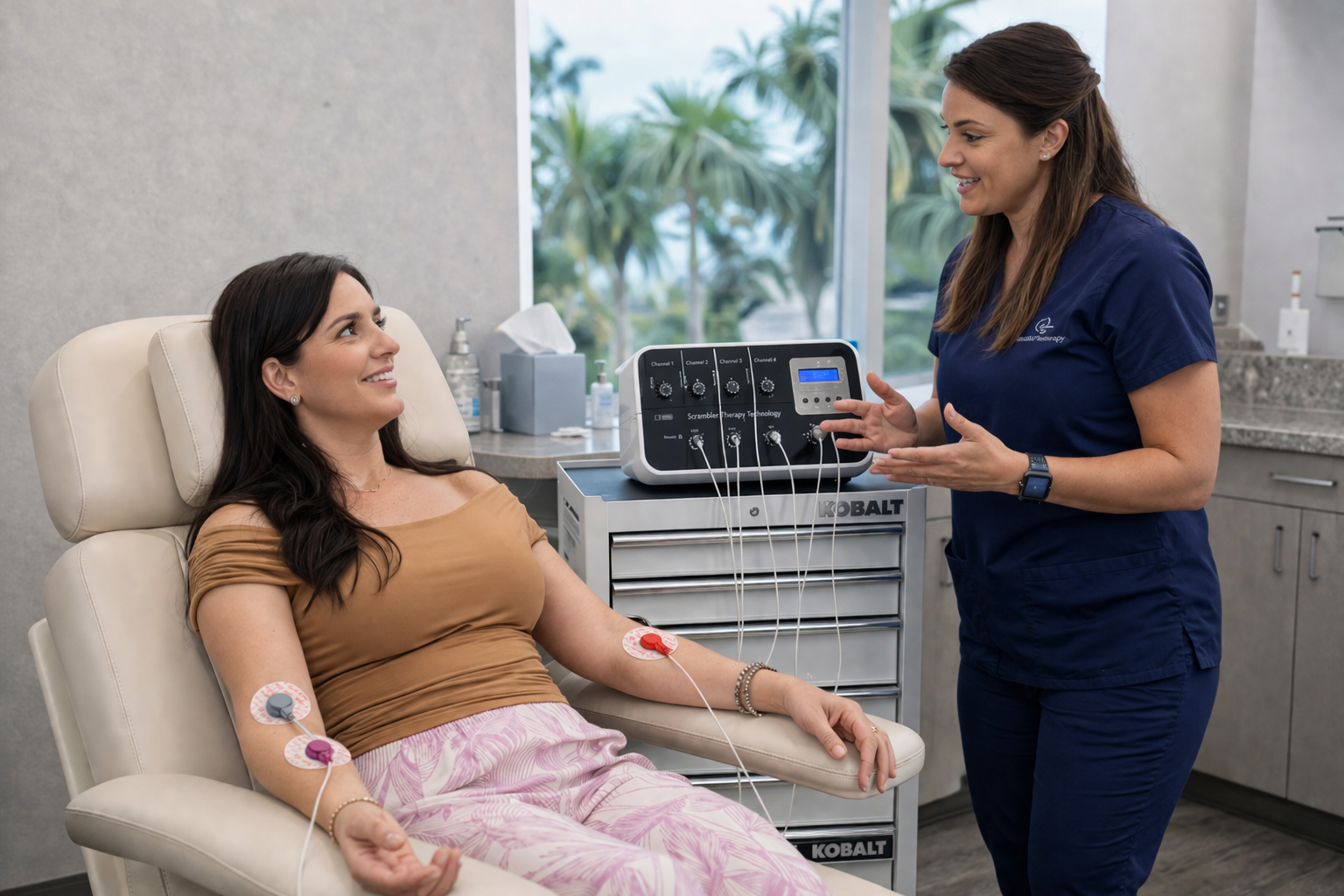
Scrambler Therapy sessions are non-invasive, painless, and conducted in a clinical setting under the guidance of trained professionals.
What Happens in a Session?
Pre-treatment Screening
Assessment of pain location, severity, and prior treatments
Contraindications (e.g. pacemakers) are reviewed
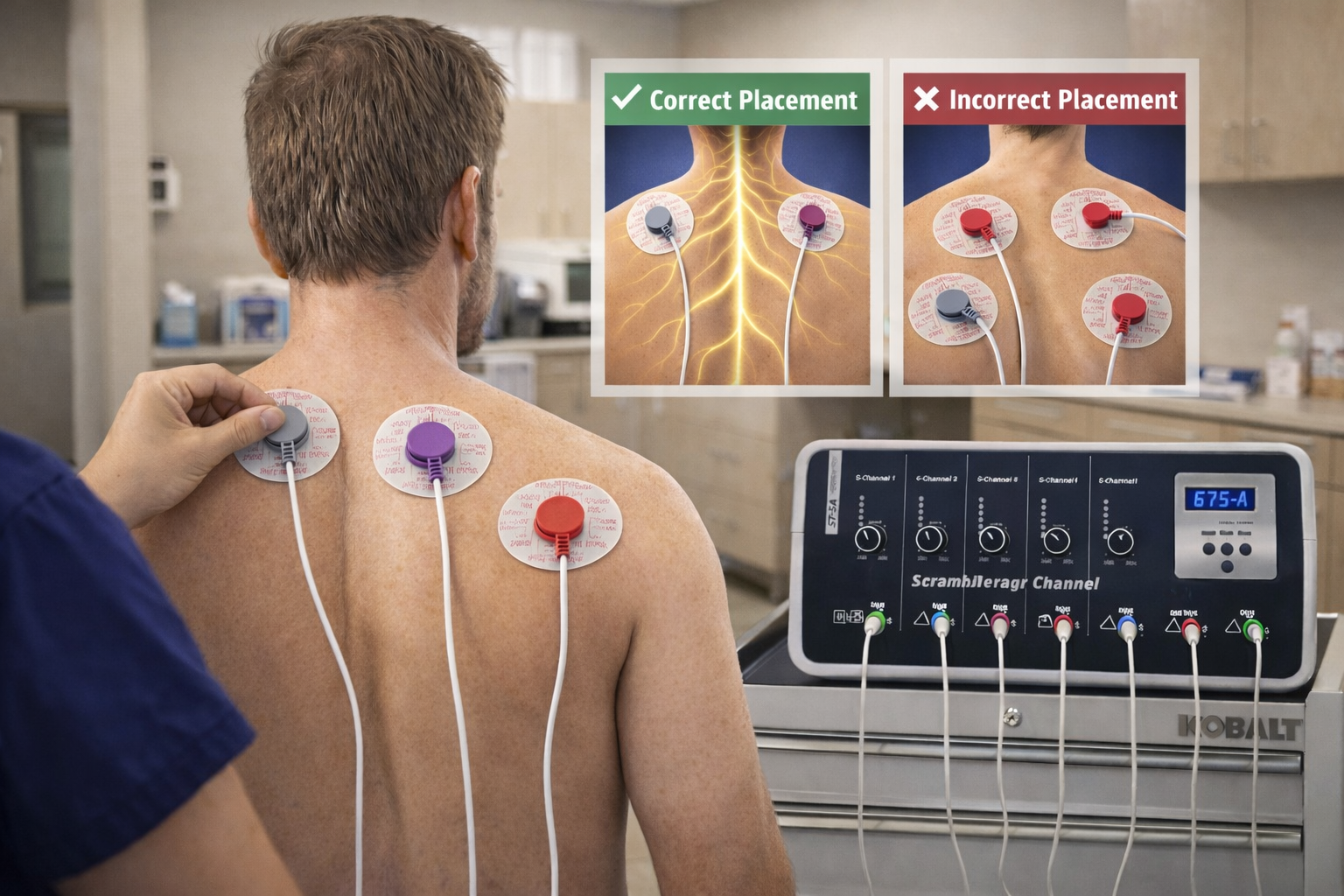
Electrode Placement
Electrodes placed near (but not directly on) the pain site
Positions are adjusted based on patient response
Session Duration and Frequency
Each session lasts 30–45 minutes
Standard protocol: 10 to 12 daily sessions over 2–3 weeks
Sensation During Therapy
Patients report buzzing or tingling, not pain
Adjustments ensure no discomfort
Post-Session Monitoring
Patients often report immediate pain reduction
Changes tracked using a numeric pain scale
How Many Sessions Are Needed?
Condition
Recommended Sessions
Observed Improvement
Chemotherapy Neuropathy
10 sessions
Up to 70% pain drop
CRPS
12–15 sessions
Gradual relief
Chronic Back Pain
10 sessions
Sustained outcomes
Now that you understand the process, let’s review the pros and limitations.
Benefits and Limitations of Scrambler Therapy
What Are the Main Benefits?
Drug-Free Pain Relief
No reliance on opioids or NSAIDs
No Systemic Side Effects
No digestive, cognitive, or mood disruptions
Neurological Reprogramming
Offers longer-lasting relief via neuroplasticity
Non-invasive and Repeatable
Safe for elderly or multi-condition patients
What Are the Limitations?
Not Effective for All Pain Types
Less success with bone pain or deep organ pain
Access and Cost Barriers
Limited availability; may not be covered by all insurers
Relief Can Be Temporary
Some patients need booster sessions every 3–6 months
Requires Specialized Training
Results vary depending on operator skill
Now, let’s compare Scrambler Therapy to other pain treatment options.
Scrambler Therapy vs Other Pain Treatments
How Does It Compare?
Treatment
Invasiveness
Long-Term Relief
Risk of Side Effects
Uses Artificial Neurons
Scrambler Therapy
Non-invasive
Often long-term
Low
Yes
TENS
Non-invasive
Short-term
Very low
No
Spinal Cord Stimulator
Invasive
Moderate to long
Infection risk
No
Pain Medications (Opioids)
None
Temporary
High (addiction, GI)
No
Acupuncture
Mildly invasive
Varies
Low
No
Summary Insights
TENS: Temporary; works via different nerve fibers (A-beta).
Spinal Cord Stimulator: Surgical; used in refractory cases.
Opioids: Mask pain; do not treat underlying signaling.
Acupuncture: May stimulate endorphin release but lacks signal override function.
Next, get answers to frequently asked questions.
FAQs About Scrambler Therapy
Is Scrambler Therapy Safe?
Yes. Scrambler Therapy is FDA-cleared and considered low-risk. It avoids systemic side effects and does not interfere with medications.
What Are the Side Effects?
Most patients report no adverse effects. Some may feel mild tingling or skin redness at electrode sites, which resolves quickly.
Does Insurance Cover It?
Coverage varies. In the U.S., some private insurers and VA hospitals may reimburse therapy. Always check coverage criteria beforehand.
Who Is Eligible?
Most adults with chronic neuropathic pain qualify. Those with pacemakers, epilepsy, or open wounds near the site may be excluded.
How Long Do Results Last?
Relief may last months or years, depending on pain type and neuroplastic adaptation. Some patients schedule booster sessions periodically.
Experiencing Chronic Pain in South Florida?
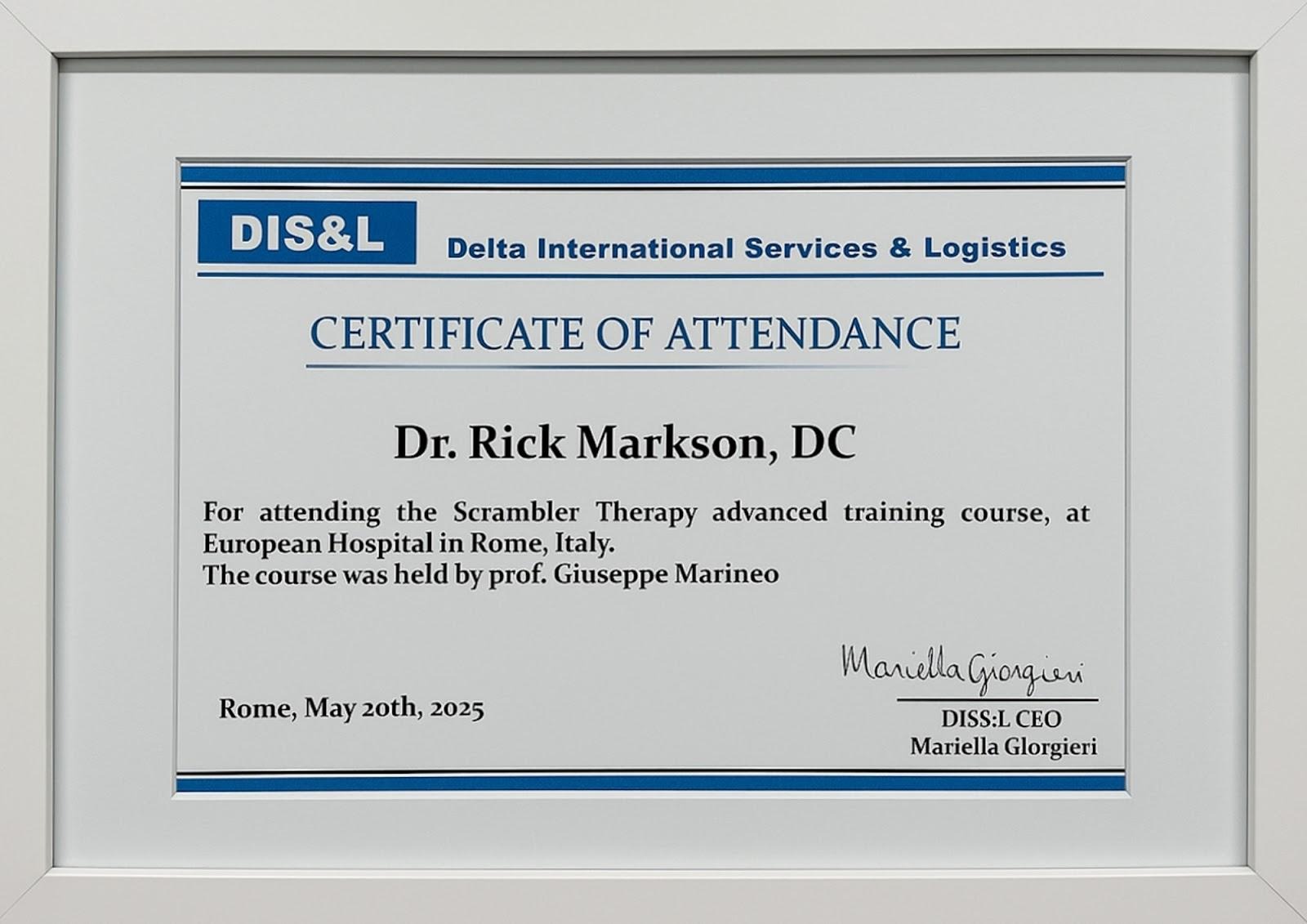
Discover South Florida Scrambler Therapy is one of the nation’s leading clinics for noninvasive chronic pain relief, offering FDA-cleared Scrambler Therapy® for adults and children. Co-founded by Dr. Rick Markson, one of the few practitioners worldwide to receive advanced certification directly from the therapy’s inventor in Rome, our clinic delivers globally recognized expertise with compassionate, personalized care. If you or a loved one is living with treatment-resistant nerve pain, we invite you to schedule a consultation and explore a life beyond pain.
.webp)




.svg)
.svg)
.svg)