Scrambler Therapy vs. Cold Laser Therapy: How Their Results Differ
Scrambler therapy and cold laser therapy are two non-invasive treatment modalities designed for pain relief without medication. As more people seek drug-free therapy options, these emerging medical devices are gaining attention in the chronic pain landscape.
Why compare these two therapies?
Both are used for chronic pain management
They provide non-invasive treatment alternatives
Each therapy targets pain through different biological mechanisms
The demand for non-opioid pain therapies continues to rise. In this article, we compare scrambler therapy vs cold laser therapy in terms of mechanisms, outcomes, conditions treated, safety, cost, and clinical evidence.
Next, we break down each treatment method to explain how they work.
What Is Scrambler Therapy?
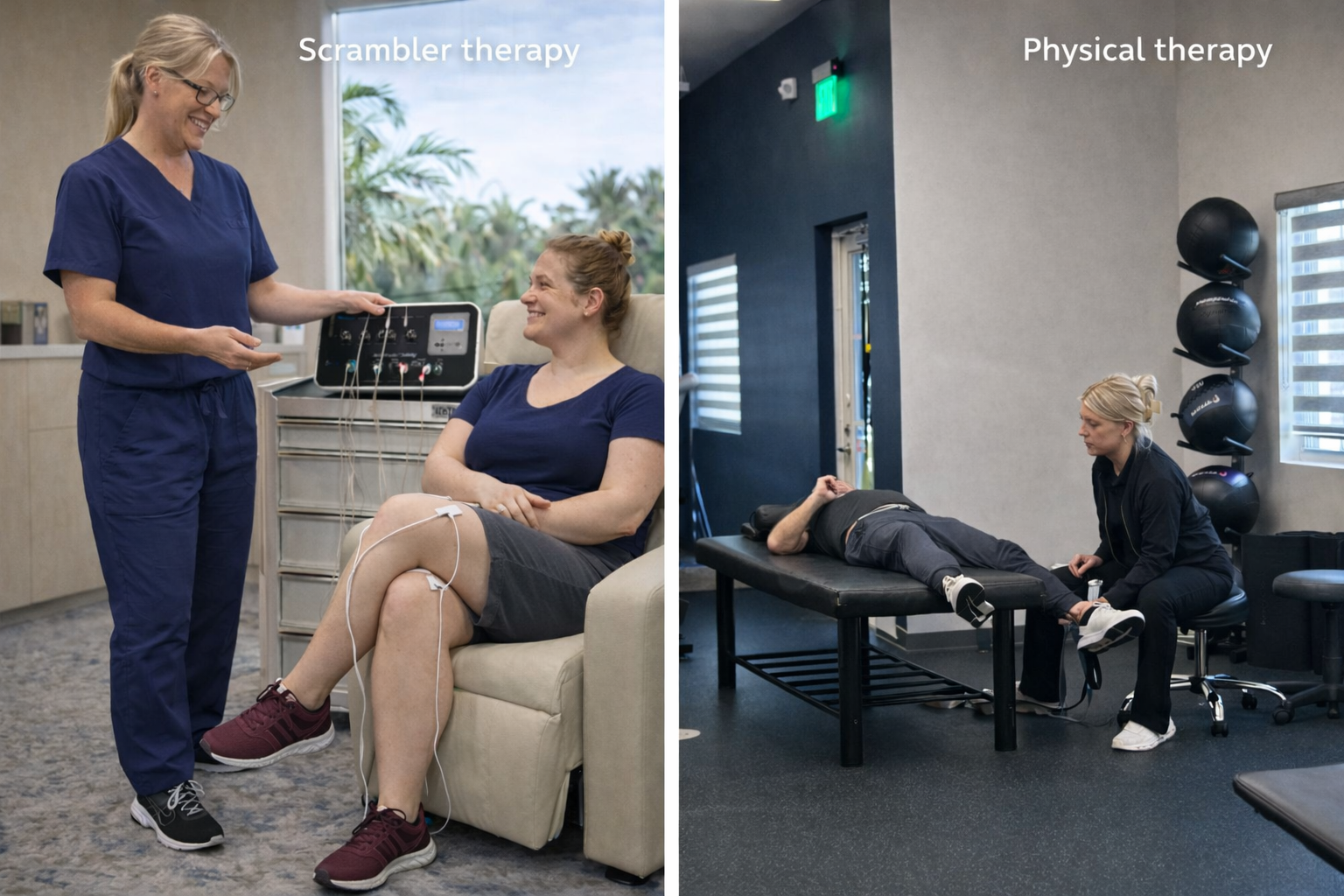
Scrambler therapy uses electrical stimulation to "retrain" nerve pathways and reduce the perception of pain. It works by delivering artificial nerve signals that mimic non-pain through surface electrode pads.
How does scrambler therapy work?
It interrupts pain signals sent to the brain
Delivers synthetic “non-pain” messages via electrodes on the skin
Stimulates neuroplasticity — the brain's ability to adapt
Key components:
Feature
Details
Device
Calmare® MC-5A (FDA-cleared)
Mechanism
Pain signal scrambling through bioelectric feedback
Session Time
30–60 minutes
Sessions Required
Typically 10–12
Common conditions treated:
Chemotherapy-induced neuropathy
Fibromyalgia
Spinal cord injury pain
Post-surgical nerve pain
Failed back surgery syndrome
Scrambler therapy is drug-free, relies on nerve stimulation, and is typically administered at specialty pain clinics.
In the next section, we look at another modern modality: cold laser therapy.
What Is Cold Laser Therapy?
Cold laser therapy (also called LLLT or low-level laser therapy) uses light energy to trigger cellular repair and reduce inflammation. It’s a light-based healing technique that stimulates tissue regeneration without heat or pain.
How cold laser therapy works:
Emits low-level red or near-infrared light
Light penetrates skin and stimulates mitochondria
Boosts ATP production, reducing inflammation and promoting repair
Scientific term: Photobiomodulation
Cold Laser Attribute
Description
Mechanism
Cellular repair via light absorption
Light Wavelength
600–1000 nm
Session Duration
5–20 minutes
Application Sites
Localized injury zones
Conditions commonly treated:
Arthritis
Tendonitis
Plantar fasciitis
Chronic joint pain
Soft tissue injuries
Cold laser therapy is often used in physiotherapy clinics, chiropractic offices, and even through at-home devices.
Now that we’ve defined both therapies, let’s compare how their mechanisms differ.
Scrambler Therapy vs. Cold Laser Therapy – How They Work Differently
Scrambler therapy alters how nerves process pain, while cold laser therapy boosts tissue healing on a cellular level.
Criteria
Scrambler Therapy
Cold Laser Therapy
Target
Nervous system
Mitochondria (cells)
Mechanism
Sends artificial "non-pain" signals
Stimulates cellular ATP production
Intervention Level
Neural reprogramming
Cellular bio-stimulation
Primary Effect
Pain perception reprogramming
Inflammation reduction, tissue regeneration
Scrambler therapy works through nociceptor interference (blocking pain receptors), while cold laser works via laser photoreception and anti-inflammatory light energy.
In the next section, we’ll look at which conditions are best suited for each therapy.
Conditions Treated by Scrambler Therapy vs. Cold Laser Therapy
Each therapy addresses different pain types, depending on origin and severity.
Scrambler Therapy Targets:
Neuropathic pain
Fibromyalgia
Nerve damage
Chemo-induced neuropathy
Chronic spinal pain
Cold Laser Therapy Targets:
Joint inflammation (e.g., arthritis)
Tendon or ligament injuries
Soft tissue injuries (e.g., sprains)
Post-exercise muscle pain
Chronic localized inflammation
Condition
Scrambler
Cold Laser
Fibromyalgia
✅
⚠️ (limited)
Arthritis
⚠️ (less effective)
✅
Neuropathy
✅
⚠️
Sprains
❌
✅
Spinal pain
✅
⚠️
In the next section, we review the scientific evidence supporting each therapy.
Clinical Evidence: Scrambler Therapy vs. Cold Laser Therapy
Both therapies are supported by clinical research, but data quality and volume vary.
Scrambler Therapy Studies:
A 2013 Pain Medicine study reported 80–90% pain reduction in cancer patients with chemo-induced neuropathy using scrambler therapy
JAMA Oncology (2019) published a randomized controlled trial confirming significant improvements in chronic nerve pain vs. placebo
Sustained effects reported up to 3 months post-treatment
Cold Laser Therapy Studies:
A 2020 meta-analysis in Lasers in Medical Science found significant pain relief in arthritis and tendinopathy cases
A 2018 Photomedicine and Laser Surgery trial confirmed improvements in soft tissue healing
Cold laser shows consistent effects on localized inflammation
Evidence Type
Scrambler Therapy
Cold Laser Therapy
Peer-reviewed trials
✅
✅
Long-term studies
Moderate
Extensive
Placebo comparisons
✅
✅
Patient-reported outcomes
High improvement
Moderate-high improvement
Both therapies show effectiveness, but scrambler therapy may offer greater pain relief for nerve-related conditions.
Now, we’ll examine safety and risks for each method.
Safety, Side Effects, and Contraindications
Both treatments have favorable safety profiles, with minimal side effects.
Scrambler Therapy Safety:
Most common side effect: temporary skin irritation at electrode site
Rare: tingling, discomfort
Contraindications: pacemakers, open wounds, pregnancy
Cold Laser Therapy Safety:
Most common: mild discomfort or warmth
Requires eye protection
Contraindications: photosensitivity, pregnancy, active tumors
Therapy
Common Side Effects
Contraindicated For
Scrambler
Redness, tingling
Pacemaker, pregnant patients
Cold Laser
Eye exposure risk
Photosensitive patients, cancer sites
Next, we compare how long treatments last, how frequently they're needed, and their costs.
Duration, Frequency, and Cost Comparison
Category
Scrambler Therapy
Cold Laser Therapy
Session Duration
30–60 mins
5–20 mins
Number of Sessions
10–12 sessions
2–3 per week, ongoing
Setting
Clinic only
Clinic or at-home
Typical Cost per Session
$200–$300
$50–$150
Insurance Coverage
Sometimes
Occasionally
Scrambler therapy is more intensive and clinic-based, while cold laser therapy is faster and more accessible, including portable home-use devices.
Next, we discuss who offers these therapies and how to access them.
Accessibility and Practitioner Availability
Scrambler Therapy:
Available in pain clinics or specialized centers
Administered by trained professionals (e.g., pain management physicians)
Not commonly available in general hospitals
Cold Laser Therapy:
Offered by chiropractors, physical therapists, sports rehab clinics
FDA-cleared home-use devices available
Less practitioner regulation, but protocols vary
Therapy
Practitioner
Setting
Scrambler
Pain specialist
Limited clinics
Cold Laser
Physiotherapists, chiropractors
Widespread & home-use
Scrambler Therapy vs. Cold Laser Therapy – Pros and Cons
Feature
Scrambler Therapy
Cold Laser Therapy
Pain Reprogramming
✅ Strong
❌ Not applicable
Inflammation Reduction
⚠️ Limited
✅ Strong
Accessibility
❌ Limited
✅ Widely available
Treatment Speed
⚠️ Slower
✅ Quick sessions
Cost Efficiency
❌ High cost
✅ Lower cost options
FDA Clearance
✅ Calmare device
✅ Multiple devices
Scrambler therapy is ideal for nerve-based chronic pain, while cold laser is better for tissue injuries and inflammation.
Let’s hear from real users of both therapies.
Real-Life Case Studies and Testimonials
Scrambler Therapy:
"After chemo, I had nerve pain in my feet. Calmare scrambler therapy gave me my mobility back within 2 weeks. The tingling vanished." — Marie, breast cancer survivor
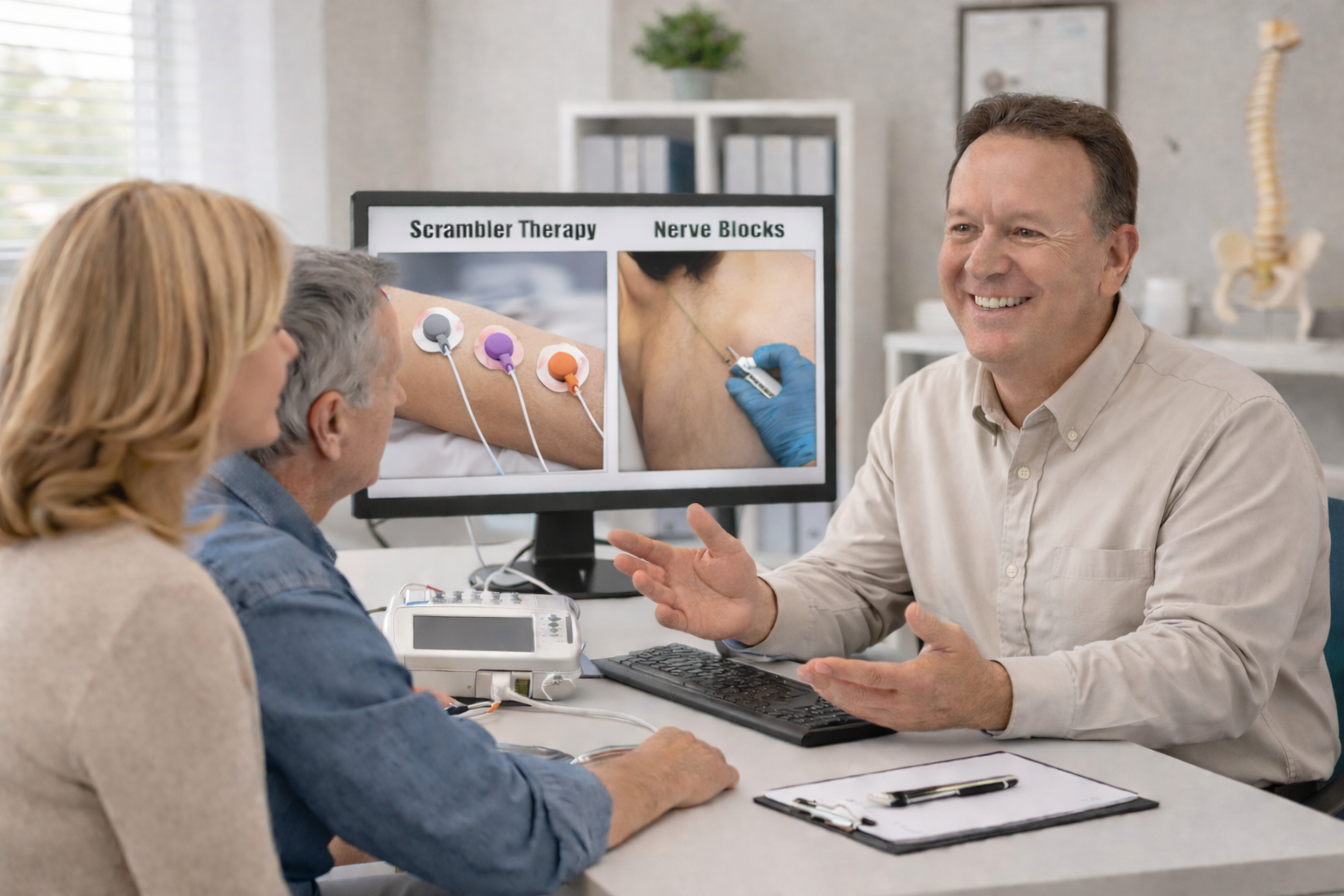
"I’d tried opioids and nerve blocks, nothing worked. Scrambler reduced my pain from 8 to 2." — James, spinal cord injury patient
Let’s wrap up with the most common FAQs.
FAQs – Scrambler Therapy vs. Cold Laser Therapy
Is scrambler therapy better than cold lasers for chronic pain?
For nerve-based pain, scrambler therapy shows higher effectiveness. Cold laser suits inflammatory and tissue conditions better.
How fast does scrambler therapy work?
Patients often see results within 3–5 sessions. Full protocol takes 10–12 sessions.
Is cold laser therapy covered by insurance?
Some insurance plans may cover it, but coverage varies widely. Always check with your provider.
Can you combine both therapies?
Yes. Some clinics combine cold lasers for inflammation and scrambler for nerve reprogramming. Always consult a medical provider first.
Experiencing Chronic Pain in South Florida?
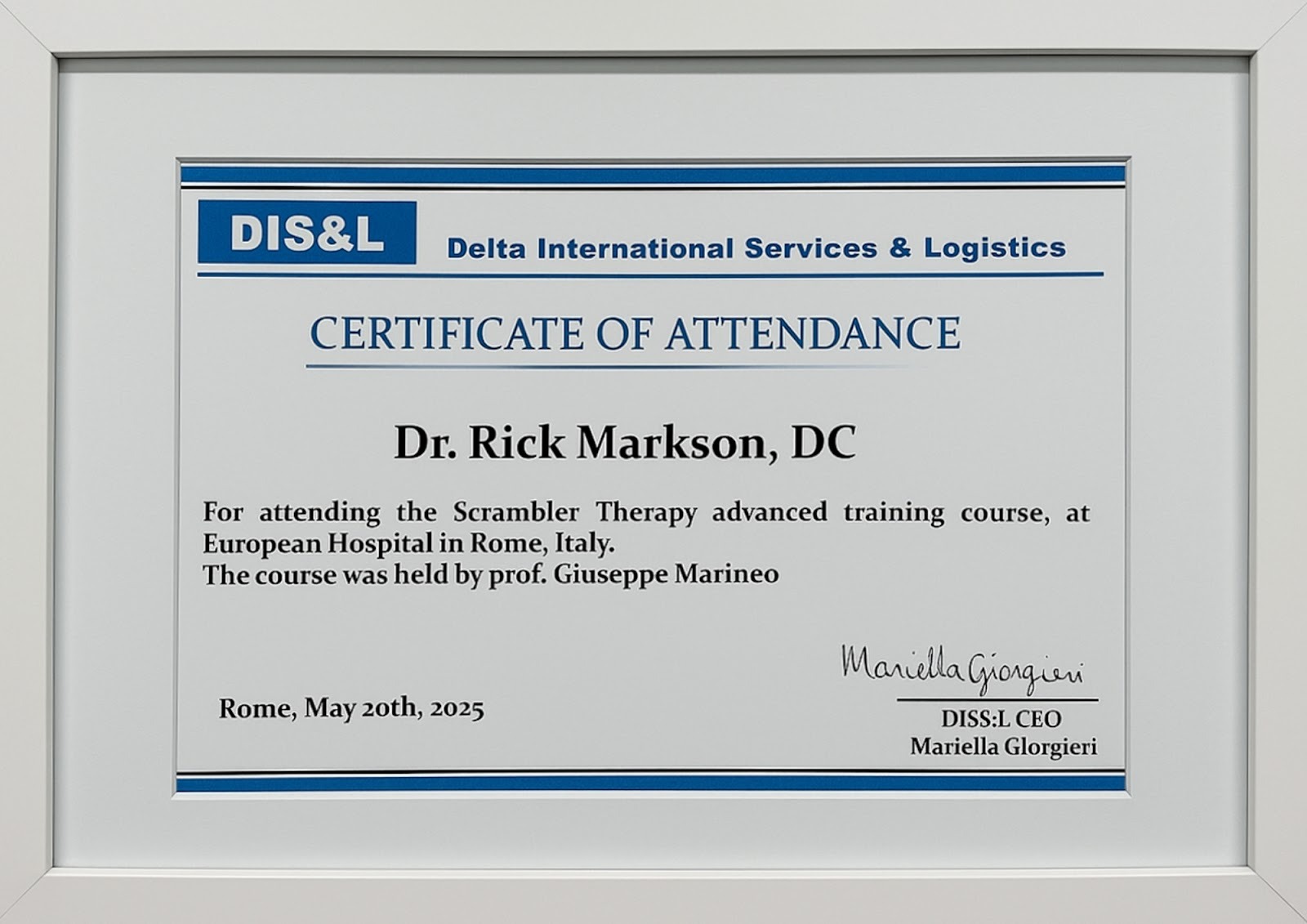
Discover South Florida Scrambler Therapy is one of the nation’s leading clinics for noninvasive chronic pain relief, offering FDA-cleared Scrambler Therapy® for adults and children. Co-founded by Dr. Rick Markson, one of the few practitioners worldwide to receive advanced certification directly from the therapy’s inventor in Rome, our clinic delivers globally recognized expertise with compassionate, personalized care. If you or a loved one is living with treatment-resistant nerve pain, we invite you to schedule a consultation and explore a life beyond pain.
.webp)



.svg)
.svg)
.svg)